
 Indochina destination specialist
Cambodia is more than three days at Angkor
Almost everyone comes for Angkor and gives it two days. Angkor deserves three mornings and the country deserves a week, because the Mekong towns, the great lake and the south coast carry almost no visitors at all.
The country in figures
What Cambodia actually is
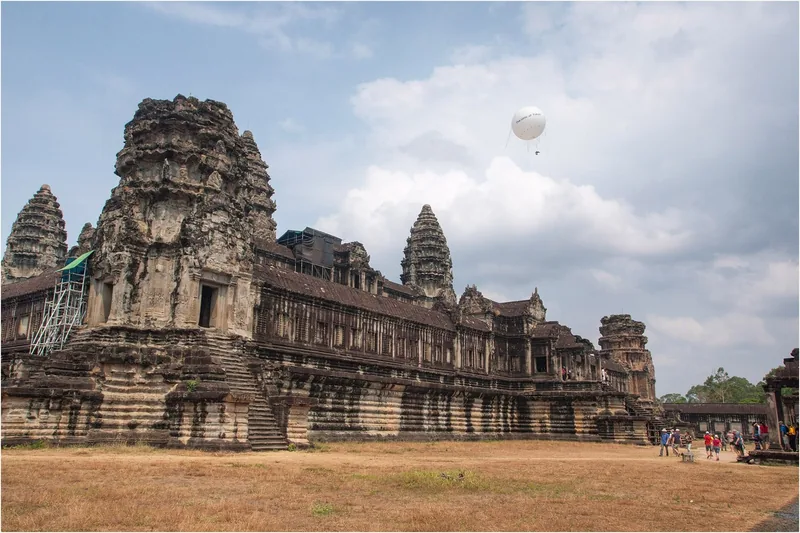
Angkor is not a temple. It is roughly 400 square kilometres of a medieval capital, of which most visitors see four buildings. The scale is the point: Angkor Wat alone covers about 160 hectares inside its moat, and the Bayon, Ta Prohm and the terraces of Angkor Thom are a separate city three kilometres to the north. A one-day ticket is a way of not seeing it.
The honest part: the central temples between nine in the morning and three in the afternoon are now hard work, and not because of the stone. Sunrise at Angkor Wat draws a crowd several hundred deep along the northern pond, which some people find remarkable and most find a queue. Pub Street in Siem Reap is a bar strip that could be anywhere. The floating village tours on the Tonle Sap run a spectrum from genuine to openly staged, and the difference is not visible from the boat ticket — it is visible from which operator sold it to you.
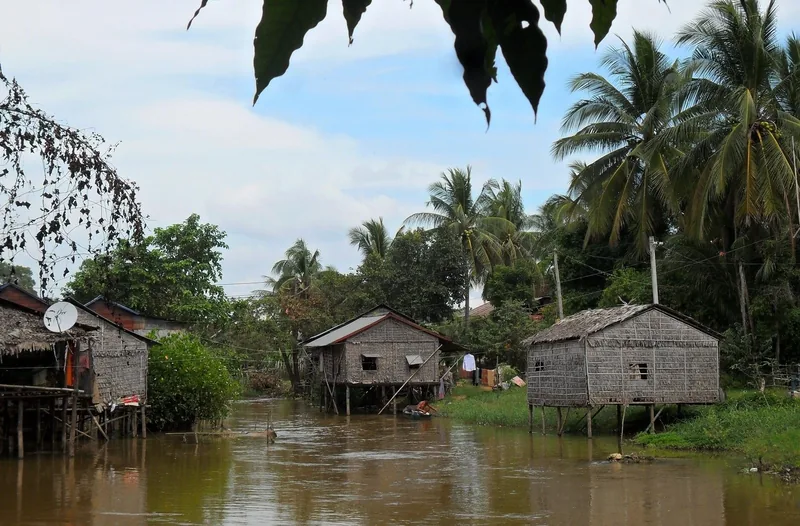
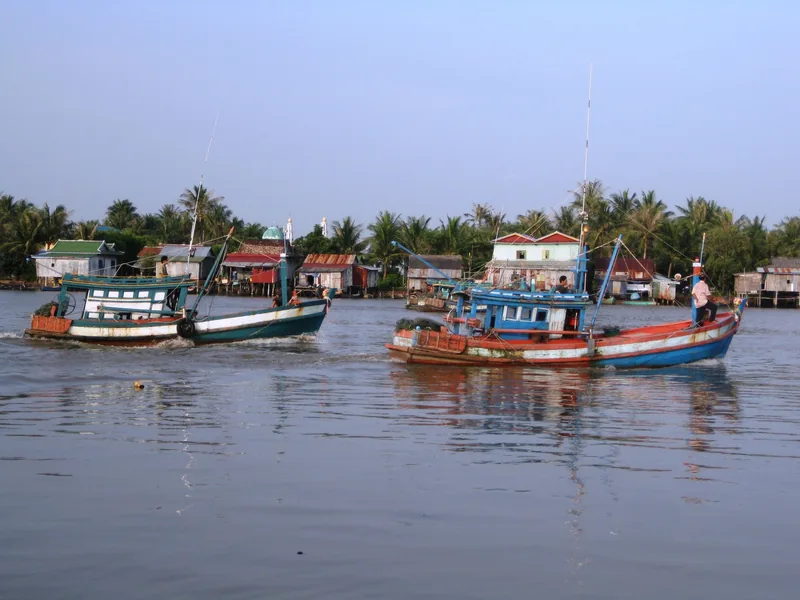
Away from that, the country is close to empty. Battambang has a colonial-era grid and a working art scene and almost no foreign visitors on a weekday. Kampong Cham and Kratie sit on a Mekong that is a kilometre wide with sandbanks in the dry season. Kampot and Kep on the south coast have pepper farms, crab markets and old French villas, and prices that have barely moved. The reason our eight-day route spends half its nights outside Siem Reap is not variety for its own sake — it is that the rest of the country is the part with room in it.
How many nights, and why fewer breaks it
Six nights is the working minimum: three in Siem Reap, two on the Mekong or in Battambang, one in Phnom Penh. Eight lets you add the coast or a second Mekong town. Four nights is Angkor plus a travel day, which is a stopover rather than a visit to Cambodia.
Three nights in Siem Reap is not an upsell. It is how the three-day pass is designed to be used: one morning at Angkor Wat and the outer group, one morning at Angkor Thom and Ta Prohm, one late afternoon at a quieter temple such as Preah Khan or Banteay Srei, with the middle of each day spent out of the heat. Compressed into two days, the second afternoon is the one where people stop looking and start photographing.
- Siem Reap: three nights, two temple mornings, one afternoon.
- Battambang: one or two nights. The drive from Siem Reap is about 3 hours.
- Kampong Cham or Kratie: one to two nights on the Mekong, 4 to 5 hours from Siem Reap.
- Phnom Penh: two nights. One is not enough to do Tuol Sleng and Choeung Ek and still have an evening.
- Kampot and Kep: two nights, about 3 hours 30 minutes south of Phnom Penh.
When to go
Cambodia has two seasons and one month everybody warns you about. November to February is dry and the mornings are around 22 to 25 degrees, which is the only time of year when standing on stone at eleven in the morning is tolerable. March warms to the mid-thirties. April is the hard month: 36 to 40 degrees in the shade at Angkor, and the Khmer new year in mid-April closes offices and fills every domestic road.
3 ideal · 2 good, with caveats · 1 the difficult months
What the wet season gives you in return is real. From June to October the moats fill, the Tonle Sap roughly quadruples in surface area and reverses the flow of its own river, the dust stops and the stone goes dark green with moss. Rain usually arrives as a heavy hour in the afternoon rather than all-day drizzle, hotel rates drop by 30 to 40 per cent, and the sunrise crowd at Angkor Wat thins to a fraction of its December size. We run trips in September and are happy to explain why.
The two weeks to avoid if you can move: mid-April for the new year, and the Water Festival in November, when Phnom Penh gains an enormous domestic crowd and the riverfront closes.
Getting there and moving around
Siem Reap–Angkor International opened in 2023 about 40 kilometres east of town, which turned a 15-minute transfer into 45 to 55 minutes. There are no long-haul flights into Cambodia; you connect through Bangkok, Singapore, Kuala Lumpur, Ho Chi Minh City or Hanoi. Bangkok to Siem Reap is about 1 hour, Ho Chi Minh City to Siem Reap under an hour, Luang Prabang to Siem Reap about 2 hours. Regional fares typically run USD 90 to 220 one way.
Inside the country almost everything is drivable. Siem Reap to Phnom Penh is 320 kilometres of decent highway, 5 hours 30 minutes with a stop, or about 45 minutes by air for roughly USD 60 to 110. We usually drive it, because the road passes through Kampong Thom and there is a reason to stop. Siem Reap to Battambang is about 3 hours; Phnom Penh to Kampot about 3 hours 30 minutes.
Around Siem Reap, a remork — the local tuk-tuk — costs about USD 15 to 25 for a full temple day and is genuinely the better vehicle in the cooler months, because you see the forest between temples instead of a window. In April we use an air-conditioned car and nobody argues.
What things cost on the ground
Cambodia is the cheapest of the three countries for rooms and food and the most expensive for entry fees, which catches people out when they budget. The Angkor pass alone is USD 62 per person for three days, and it is not included in any ticket you can negotiate.
| Typical price | Notes | |
|---|---|---|
| Three-star hotel, Siem Reap | USD 30 – 55 per night | Pool, breakfast, walkable to the old market |
| Four-star or good boutique | USD 65 – 130 per night | Siem Reap has an unusual amount of this at the price |
| High-end colonial or resort | USD 200 – 500 per night | A handful of properties, mostly in Siem Reap |
| Khmer meal, local restaurant | USD 4 – 8 per person | Fish amok, lok lak, a beer |
| Good restaurant, dinner | USD 18 – 35 per person | Siem Reap and Phnom Penh both have serious kitchens |
| Angkor three-day pass | USD 62 | Valid on any three days within ten; photo taken at the gate |
| Banteay Srei, inside the pass | No extra charge | 37 km from town, about 50 minutes each way |
| Tuol Sleng and Choeung Ek | About USD 5 and USD 6 | Audio guide included at Choeung Ek and worth taking |
| Remork for a temple day | USD 15 – 25 | Cooler months; not recommended in April |
| Litre of water, shop | Under USD 0.50 | Carry more than you think in the dry season |
The US dollar is everyday currency here and ATMs dispense it. Notes must be clean and untorn or they will be refused, and anything below a dollar comes back to you in riel at roughly 4,000 to the dollar. Bring small denominations; a fifty-dollar note at a village stall is a problem for both of you.
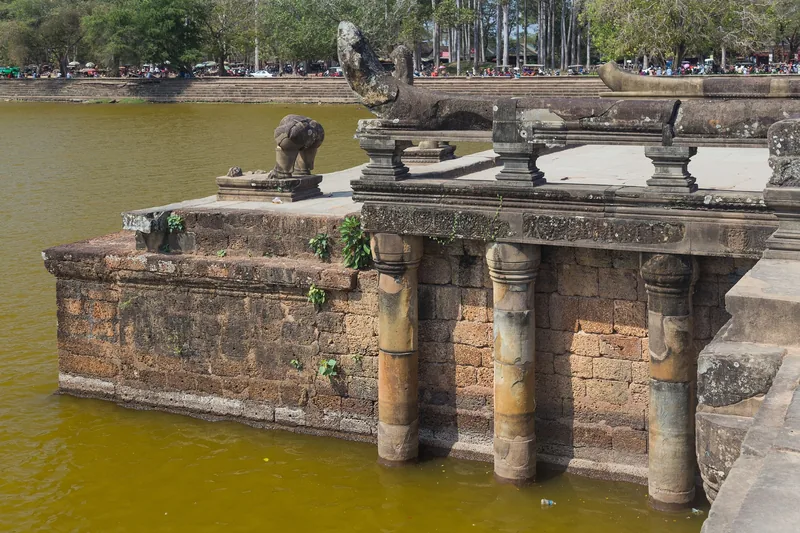
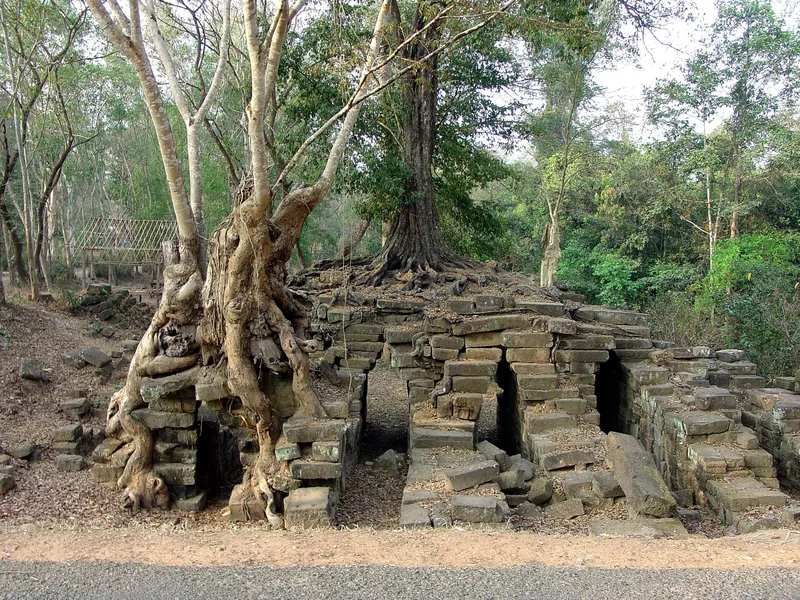
Cambodia in pictures
Trips that go here
Two of our routes cover Cambodia. The eight-day Angkor and Mekong route is the country on its own, with three nights at the temples and the rest on the river and in Phnom Penh. The fifteen-day Indochina route ends here with two nights and two temple sessions, which is the right amount when Cambodia is the last of three countries rather than the whole trip.
Plan My Trip
Angkor without the middle of the day
Three nights, two mornings, one late afternoon, and a guide who knows which gate is empty at seven. Tell us your dates.
When to leave Cambodia off the list
Four reasons to skip it, or to move the dates.
- You only have three or four nights and Angkor is the only thing you want. That is a legitimate stopover, but it is not a trip to Cambodia and we would rather you added it to a Vietnam route than booked it as one.
- You are travelling in April and cannot change. Forty degrees on unshaded stone is not a minor inconvenience; it ends temple mornings by ten and it is dangerous for older travellers and small children.
- You want mountains, cool air or hill walking. Cambodia is flat and hot. The Cardamoms exist but the infrastructure for walking them does not, at the standard we would put a guest into. Northern Vietnam or northern Laos is the answer.
- You are unwilling to encounter the Khmer Rouge period. Tuol Sleng and Choeung Ek are hard, and Cambodians will raise the years between 1975 and 1979 in ordinary conversation because nearly every family lost someone. You can skip the sites; you cannot skip the history, and pretending otherwise makes for a strange trip.
- Persistent, organised child begging around the temples upsets you into giving money. It is a real problem here, the money sustains it, and your guide will ask you not to. If that instruction would ruin your day, this is worth knowing now.
Common questions
Questions travellers ask most
Is two days enough for Angkor?
Two days covers the main group and leaves you tired. Three nights in Siem Reap with two temple mornings and one late afternoon is the version we book, because the temples are best before nine and after four, and the middle of the day is better spent in a pool than on a causeway.
Is the sunrise at Angkor Wat worth it?
It depends what you want. From November to February several hundred people line the northern pond before six in the morning, and the photograph you have seen is taken from within that crowd. The light at Ta Prohm or Preah Khan at the same hour is better and you will have it nearly to yourself. We offer both and describe both honestly.
Which floating village is the real one?
Kampong Phluk and Kampong Khleang are working communities where people live year-round and the boats belong to families; Chong Kneas, the closest to town, is heavily set up for visitors. We use the further ones, which costs an extra hour of driving each way.
Is Cambodia safe to travel in?
For ordinary tourism, yes, with normal city caution in Phnom Penh, particularly with bags on the riverfront at night. The one thing worth taking seriously outside towns is unexploded ordnance in a few rural provinces: stay on marked paths and do not wander into fields, which is advice your guide will repeat.
Related
Read next
Vietnam · Cambodia · Laos
Destinations
Country and place guides for Vietnam, Cambodia and Laos.
View journey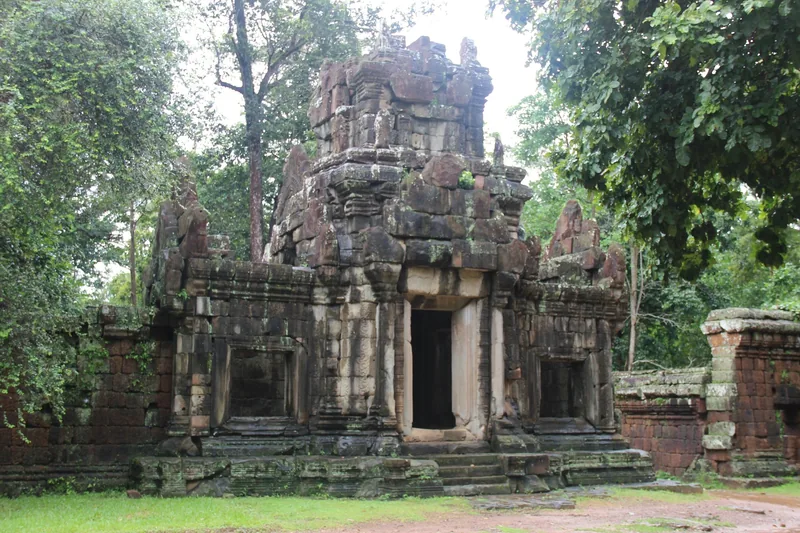
Example itinerary — fully customizable
Angkor and the Mekong
Eight days: Angkor over two days, Battambang, and Phnom Penh.
View journey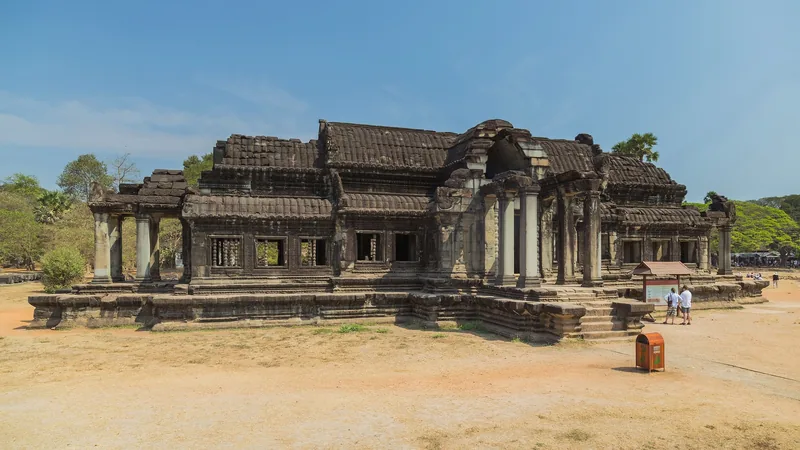
Example itinerary — fully customizable
Classic Indochina
Fifteen days, three countries, nothing shorter than a two-night stop.
View journey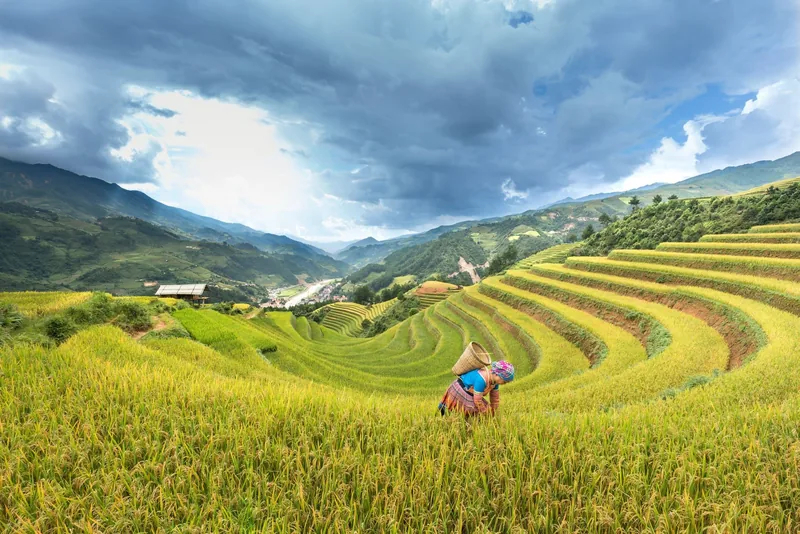
Planning
When to go
Month-by-month conditions across Vietnam, Cambodia and Laos, including what the quiet season is good for.
View journey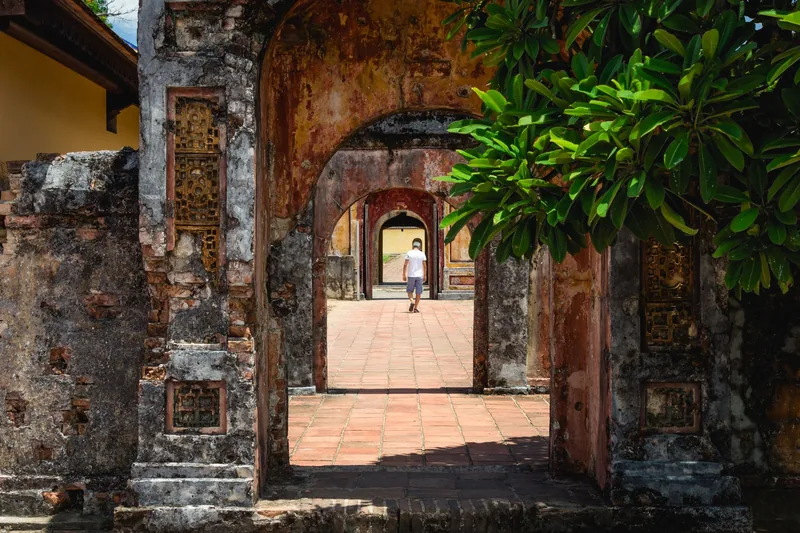
Planning
How many days
Realistic day counts for one, two and three countries, and the routes that do not work.
View journey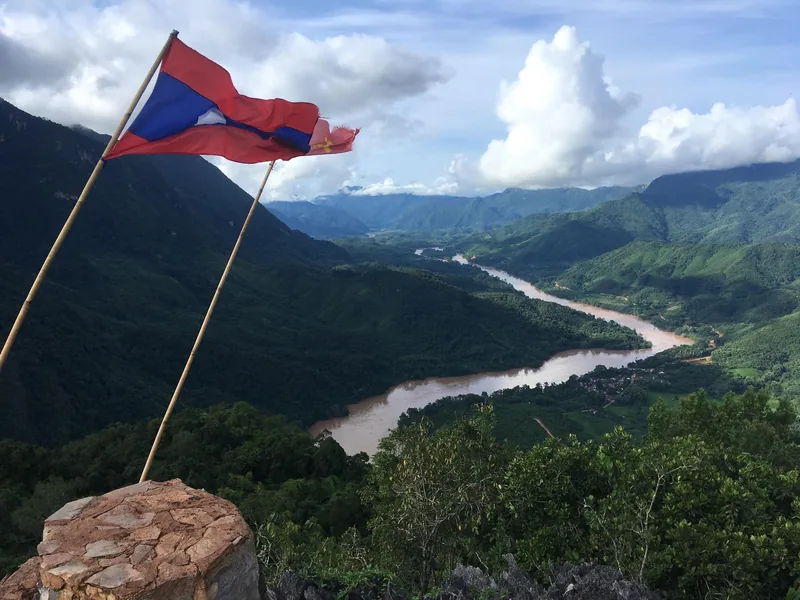
Destination guide
Laos
One river, one small town, and the case for staying longer.
View journey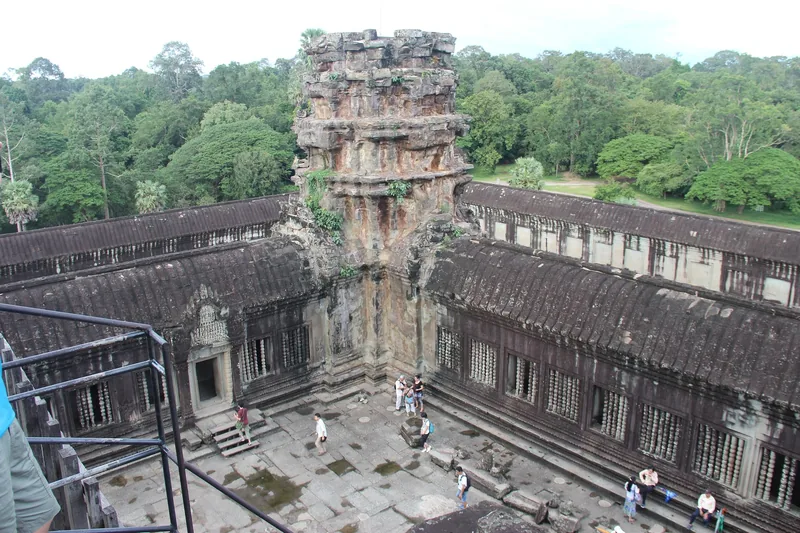
Start planning
Tell us about the journey you have in mind
Dates, party size and the places you care about are enough to start. You get a draft route and an indicative price, not a brochure.
Prefer to talk? WhatsApp or call+84 766 019 399