
 Indochina destination specialist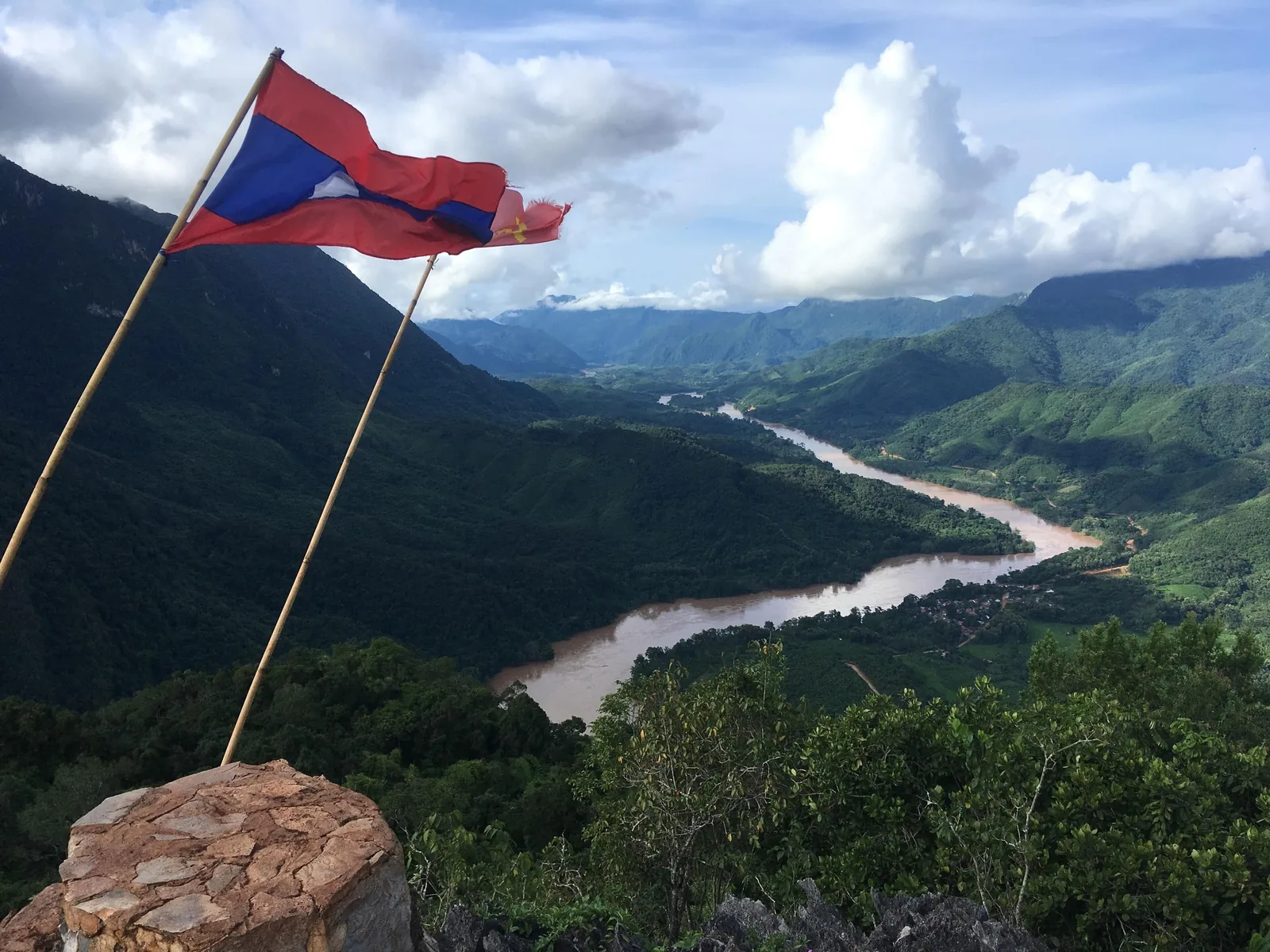
Laos rewards staying still
The quietest of the three countries and the one most often given two nights. It has one town that everybody visits, a river that runs the length of it, and a rhythm that punishes anybody trying to cover ground.
The country in figures
What Laos actually is
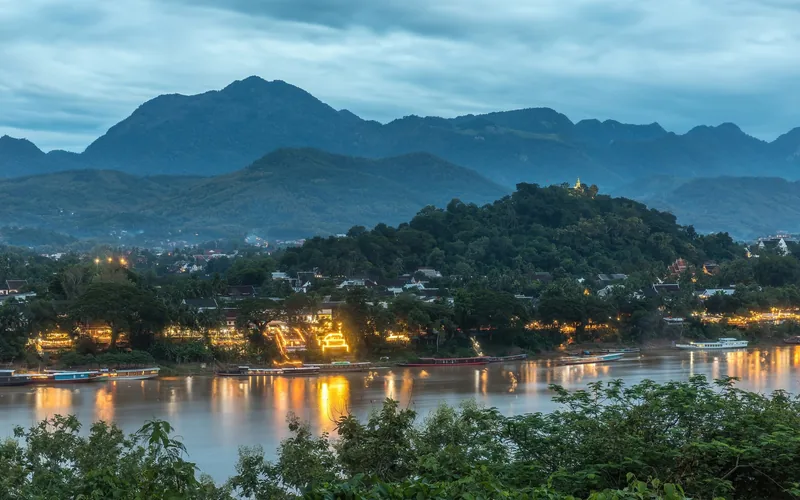
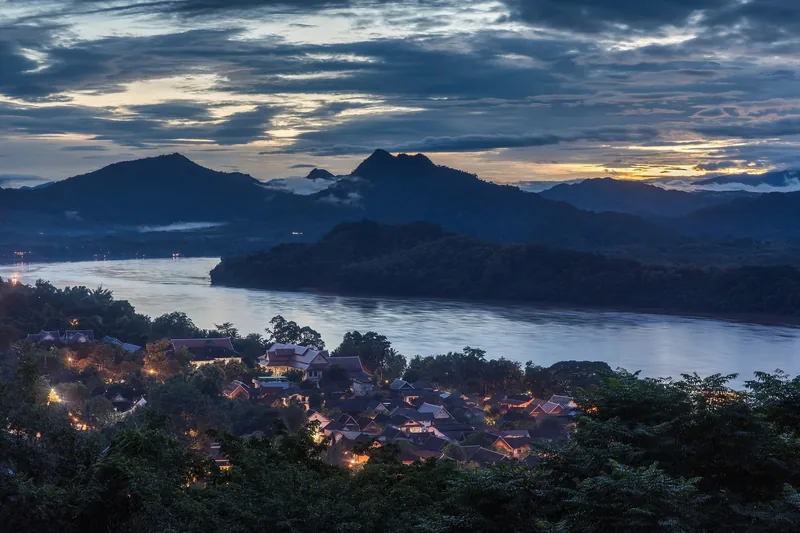
Laos has roughly seven and a half million people in a country the size of the United Kingdom, no coastline, and one town that carries most of its foreign visitors. Luang Prabang sits on a peninsula where the Nam Khan meets the Mekong, holds about 50,000 people, and can be walked end to end in twenty minutes. It became a UNESCO site in 1995 and the protection is visible: the old quarter is low, wooden and tiled, with no tower blocks and very little traffic.
The honest part: the protection has also made it an expensive, tidy version of itself. Sisavangvong Road at seven in the evening is a night market and a row of restaurants with laminated menus, and a good number of the old family houses in the centre are now guesthouses and boutiques. The alms round at dawn, which is a daily religious obligation rather than a display, has in places been turned into a photographic scrum with tour buses and flash. We take guests to it only with an explanation first, from across the street, without cameras in anyone's face — and some guests, after the explanation, choose not to go at all, which is a perfectly good outcome.
Two streets back from the river, and anywhere outside the town, none of that applies. The Nam Ou valley north of Luang Prabang, the villages up the Mekong beyond Pak Ou, the Bolaven plateau in the south with its coffee and its waterfalls — these have almost no visitors and no apparatus for them. Laos is also the most heavily bombed country per head in history, with unexploded ordnance still being cleared in the eastern provinces; the UXO visitor centre in Luang Prabang explains this better than any guide can, and takes an hour.
How many nights, and why fewer breaks it
Five nights is the minimum that makes sense: three in Luang Prabang, two somewhere else. Seven or eight is where Laos starts to do what it is good at, which is nothing in particular, slowly, in the same place. Our nine-day northern route uses four stops in nine nights, which is about half the pace of an equivalent trip in Vietnam.
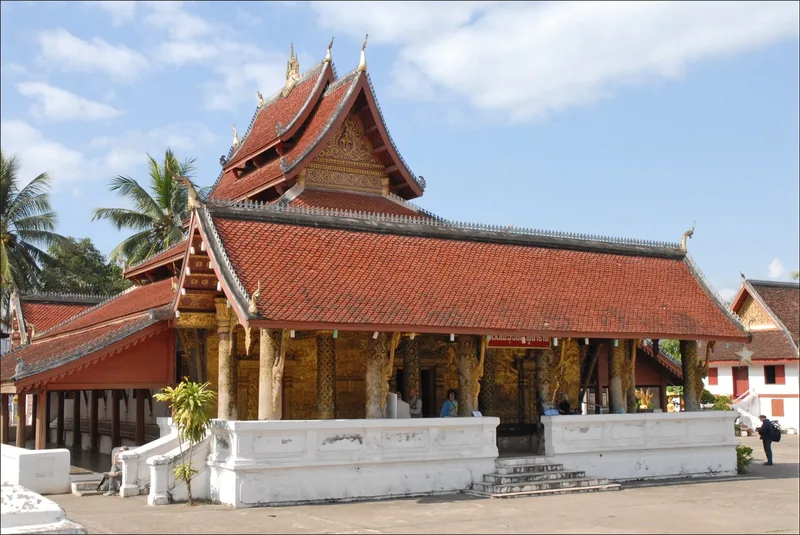
Two nights in Luang Prabang gives you one full day. That day has to hold the town, the Mekong, the Kuang Si falls and a temple or two, and it turns a place whose whole quality is unhurriedness into a checklist. The third morning is the one where people stop photographing and start sitting by the river, and it is the reason to come.
- Luang Prabang: three nights, and the third is not padding.
- Nong Khiaw or the Nam Ou valley: two nights, about 4 hours north by road, limestone cliffs straight out of the river.
- Vientiane: one night, occasionally two. It is a low-rise, easy capital, and it is not why you came.
- Plain of Jars, Phonsavan: two nights, and it needs a flight or a long drive. Take it only if the history interests you.
- Bolaven plateau and the south: three nights, and really a separate trip from the north.
When to go
October to February is the clean answer: dry, clear, 15 to 28 degrees in the north, and cold enough in Luang Prabang in December and January that you want a jacket before eight in the morning. Then comes the part nobody puts in a brochure.
3 ideal · 2 good, with caveats · 1 the difficult months
March and early April are the burning season. Agricultural fields are cleared by fire across the northern uplands, and for several weeks the valleys fill with smoke that cuts visibility to a few hundred metres, greys out every view and irritates eyes and lungs. Flights into Luang Prabang are occasionally delayed by it. The temperature is pleasant and the prices are low, and we still tell people to go in a different month, particularly anyone with asthma.
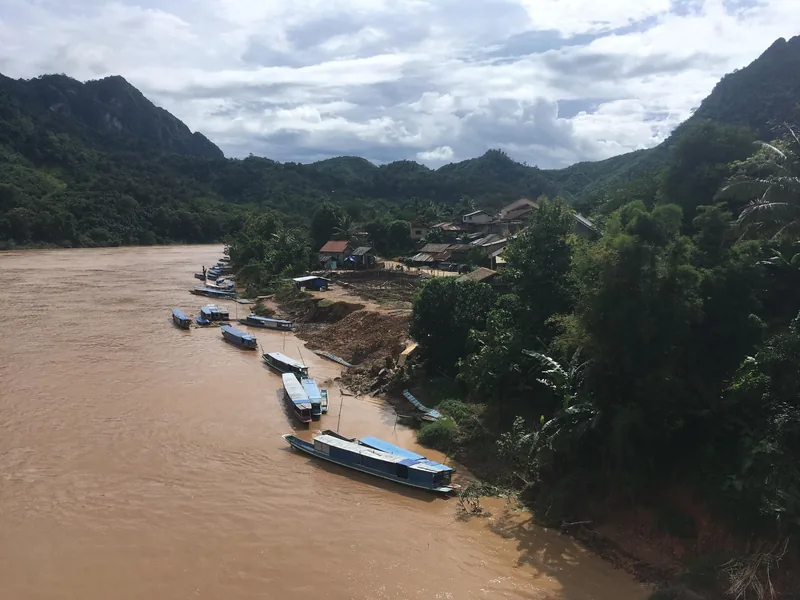
The wet season, June to September, is the opposite trade. Rain comes in heavy bursts rather than all day, the Mekong rises several metres and runs brown and fast, the hills go green, waterfalls that are a trickle in March become substantial, and there are almost no other travellers. Some unpaved roads in the north become unreliable, so routes are built with fewer of them. It is our favourite time of year here and the cheapest.
Getting there and moving around
No long-haul flight lands in Laos. You connect through Bangkok, Hanoi, Ho Chi Minh City, Siem Reap, Chiang Mai or Singapore. Bangkok to Luang Prabang is about 1 hour 50 minutes, Hanoi to Luang Prabang about 1 hour, Siem Reap to Luang Prabang about 2 hours. Regional fares run roughly USD 110 to 260 one way, and the Luang Prabang routes are thin enough that a cancellation can cost you a day — we build a night of slack around them.
Inside the country the railway changed things. The line from Vientiane to Luang Prabang opened at the end of 2021 and covers in about two hours what used to be a nine-hour mountain drive, with a stop at Vang Vieng in between. Tickets are cheap, typically the equivalent of USD 15 to 30, and they sell out several days ahead in high season because Lao and Chinese travellers use the line heavily. Booking is not something to leave to the morning.
Roads outside the rail corridor are slow. Luang Prabang north to Nong Khiaw is about 140 kilometres and takes close to 4 hours, because the road climbs and turns continuously. Boats are the alternative and often the better one: upriver to Pak Ou is around 2 hours with the engine working, and the return with the current is quieter and faster. Domestic flights link Luang Prabang, Vientiane and Phonsavan and are useful for the Plain of Jars, less so for anything else.
What things cost on the ground
Laos is not the bargain it was before 2020 — hotel rates in Luang Prabang have risen and the kip has been volatile, so most tourism prices are quoted or effectively pegged in US dollars. Food and transport remain cheap; rooms in the old quarter are the line that surprises people.
| Typical price | Notes | |
|---|---|---|
| Simple guesthouse, Luang Prabang | USD 30 – 50 per night | Old quarter, wooden, breakfast, no lift |
| Four-star or good boutique | USD 80 – 160 per night | Converted colonial houses, small and booked early |
| High-end heritage property | USD 250 – 600 per night | A handful in town and one or two on the river |
| Noodle soup or laap, local place | USD 2 – 4 | Breakfast is noodles here, as it is everywhere in the region |
| Restaurant dinner, mid-range | USD 10 – 20 per person | Including a Beerlao |
| Kuang Si falls entry | Around USD 2 – 3 | Plus about USD 20 – 25 for a return vehicle, 30 km each way |
| Royal Palace Museum | Around USD 2 – 3 | No photography inside; shoes off |
| UXO visitor centre | Donation | An hour, and the most useful hour in town |
| Slow boat, Pak Ou return | USD 45 – 80 per boat | Charter, not per person; four hours on the water |
| Vientiane to Luang Prabang train | USD 15 – 30 | Book several days ahead in high season |
Cards are accepted at hotels and the better restaurants in Luang Prabang and Vientiane and almost nowhere else. ATMs are reliable in both towns and unreliable north of them, so draw what you need before heading up the Nam Ou. Change small notes early — a large note at a village shop is a problem.
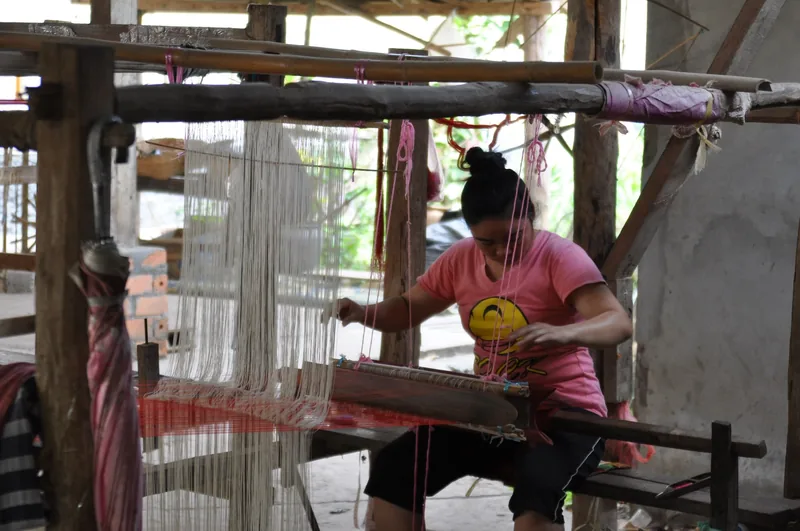
Laos in pictures

Trips that go here
The nine-day northern Laos route is the country at its own speed: three nights in Luang Prabang, two up the Nam Ou, the Mekong by boat rather than by road, and no day with more than four hours of movement in it. The fifteen-day Indochina route includes three nights in Luang Prabang between Vietnam and Cambodia, which is the shortest version of Laos we are willing to build.
Plan My Trip
Nine days at the speed the country runs at
Four stops, two rivers and three nights in one town. Send your dates and we will tell you honestly whether the month works.
When to leave Laos off the list
Five situations where Laos is the wrong choice, and one of them is about you rather than the country.
- You have two nights to give it. Two nights in Luang Prabang is one day, and one day here produces a nice lunch and a sense that you missed something. Add the nights or leave the country for another trip.
- You are travelling in March or the first half of April. The burning season greys out the entire north for weeks, and there is no itinerary that works around smoke.
- You want a beach. Laos is landlocked. The Mekong is a working river, brown and fast in the wet season, and swimming in it is not the plan.
- You want nightlife, shopping or a city. Vientiane is a quiet capital of low buildings, Luang Prabang effectively closes by half past eleven, and that is not an accident of scheduling — it is a curfew that the town keeps.
- You cannot travel without a full day's programme. Laos is the one country of the three where the right answer on a given afternoon is often nothing, and travellers who need a schedule find it frustrating rather than restful. That is a real mismatch and we would rather name it than sell around it.
Common questions
Questions travellers ask most
How many nights do I need in Luang Prabang?
Three. One day covers the town and the Kuang Si falls badly; two days cover them properly and leave a morning on the river; the third is the one where the place stops being a sightseeing list. If your trip only has room for two, we will still book it, and we will tell you what you are giving up.
Should I watch the alms round?
Only if you are willing to do it properly: from across the street, seated or standing still, no flash, no camera close to anyone's face, and no buying of food from the stalls set up to sell it to visitors. It is a religious obligation performed daily, not a performance. Our guides explain the etiquette the evening before, and some guests decide to sleep in instead.
Is the train better than flying between Vientiane and Luang Prabang?
For most trips, yes. Two hours on the ground beats a flight once you count airport time, it costs a fraction as much, and the mountain section is worth seeing. The catch is availability: seats release a limited number of days ahead and sell out in high season, so it has to be booked as soon as your dates are fixed.
Is Laos expensive compared to Vietnam and Cambodia?
Food and local transport are cheaper. Hotels in Luang Prabang are not — the old quarter has a fixed number of protected buildings and demand outruns them from November to February. Boat charters are also charged per boat rather than per person, which makes them good value for four and expensive for two.
Related
Read next
Vietnam · Cambodia · Laos
Destinations
Country and place guides for Vietnam, Cambodia and Laos.
View journey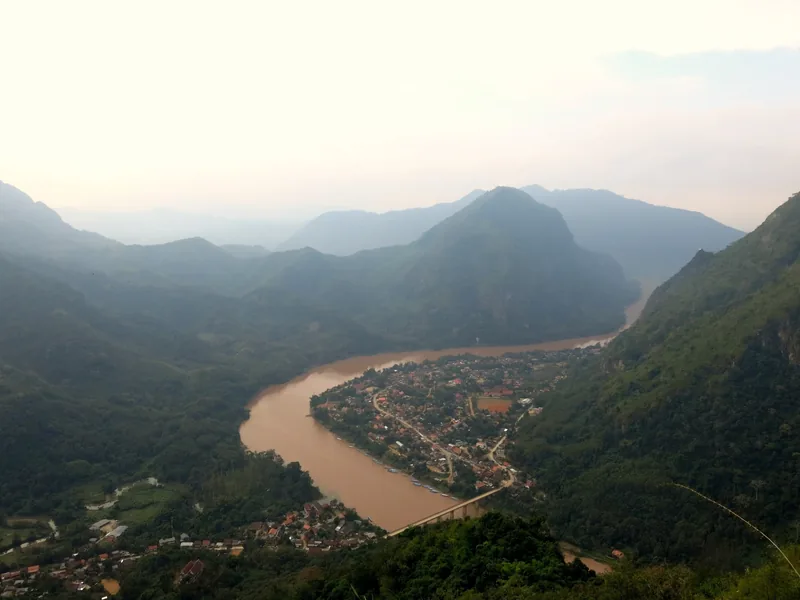
Example itinerary — fully customizable
Northern Laos, slowly
Nine days, four stops, northern Laos without a daily pack-up.
View journey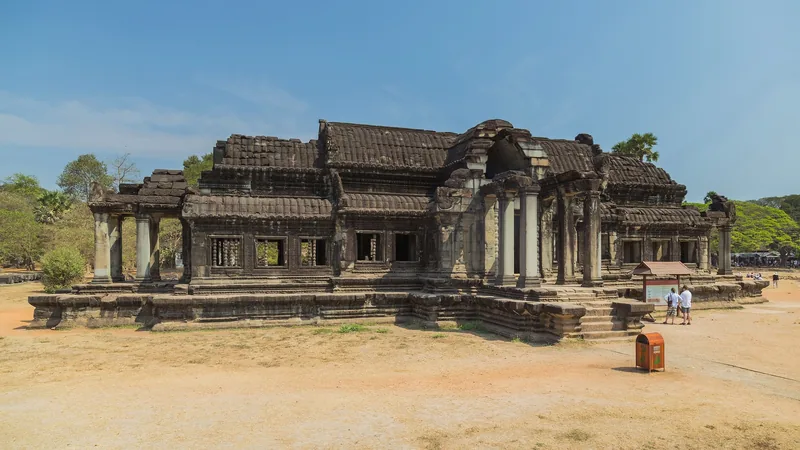
Example itinerary — fully customizable
Classic Indochina
Fifteen days, three countries, nothing shorter than a two-night stop.
View journey
Planning
When to go
Month-by-month conditions across Vietnam, Cambodia and Laos, including what the quiet season is good for.
View journey
Planning
How many days
Realistic day counts for one, two and three countries, and the routes that do not work.
View journey
Destination guide
Cambodia
Angkor done properly, plus the Mekong and the coast nobody sees.
View journey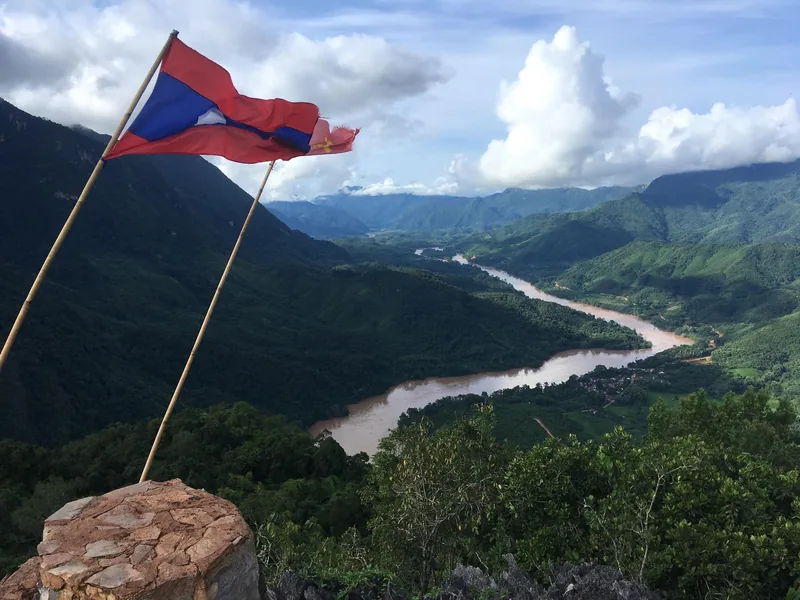
Start planning
Tell us about the journey you have in mind
Dates, party size and the places you care about are enough to start. You get a draft route and an indicative price, not a brochure.
Prefer to talk? WhatsApp or call+84 766 019 399