
 Indochina destination specialist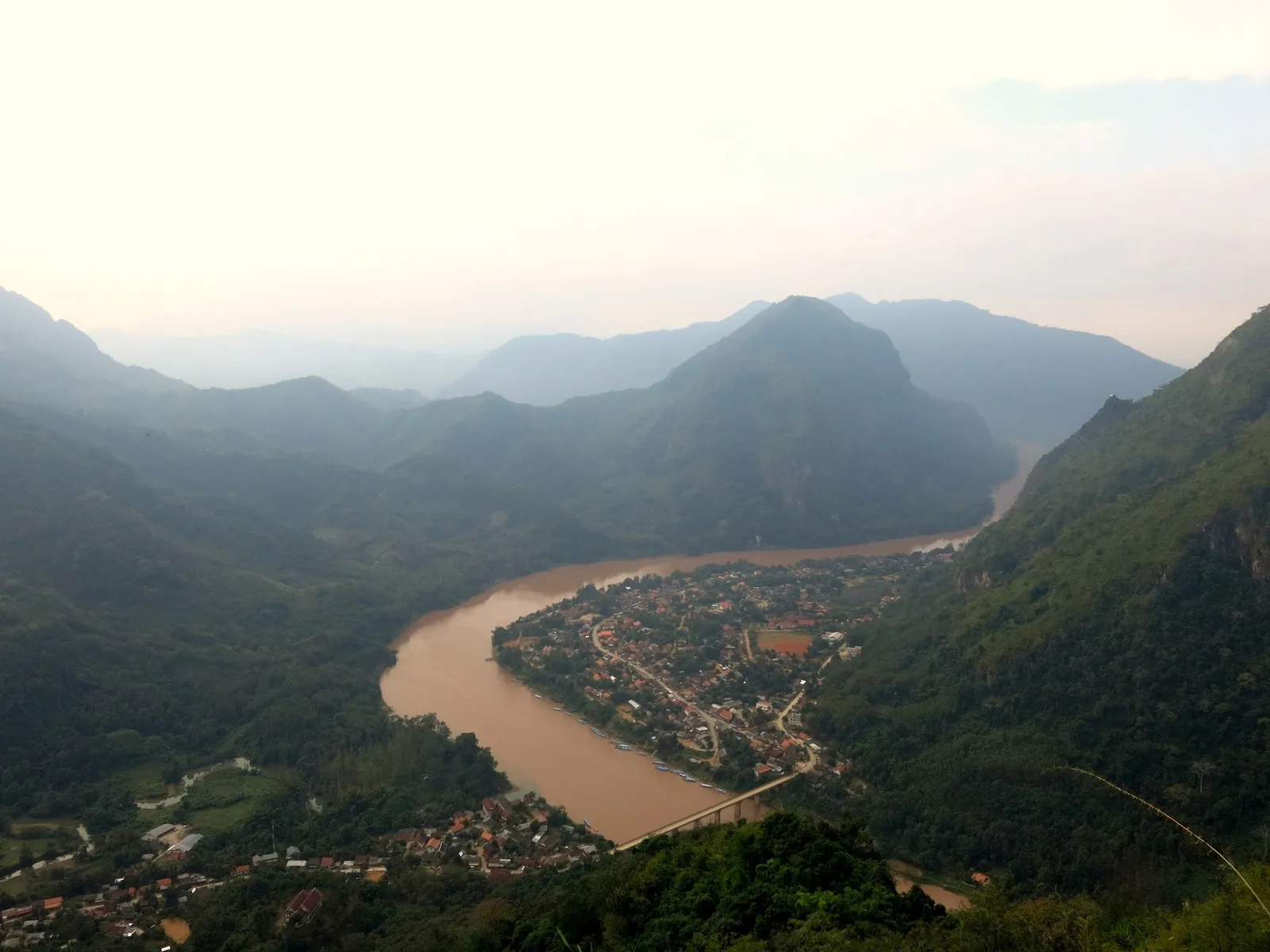
9 days · Example itinerary — fully customizable
Northern Laos at the speed it works at
Nine days and four places. Three nights in Luang Prabang, two on the Nam Ou at Nong Khiaw, two on the Xieng Khouang plateau for the Plain of Jars, and a last night in Vientiane before you fly.
At a glance
- Length
- 9 days, 8 nights
- Group
- 4 – 12, or private from 2
- Start
- Luang Prabang
- End
- Vientiane
- Effort
- Easy to moderate; one 8-hour road day
- From
- USD 1,940 per person
The route
Who this is for
This is for people who have worked out that Laos punishes a packed itinerary. Nine days here buys four places rather than seven, because the roads are mountain roads and a stop that looks like two hours on a map is four in a vehicle. Everyone who tries to add Vang Vieng and the four-thousand islands to a nine-day trip spends half of it in a car.
It suits walkers, photographers and readers more than it suits people who want a lot arranged. Two of the nine days have almost nothing scheduled after lunch. If that reads as poor value rather than as the point, the ten-day walking route in northern Vietnam or the fifteen-day Indochina journey will give you more per day. One warning that is not a matter of taste: day six is eight hours on a road, and it buys the Plain of Jars.
Day by day
Day 1
Arrive Luang Prabang
The airport is four kilometres from the peninsula, ten minutes on a quiet road, and arrivals is small enough that we meet you at the door rather than in a crowd.
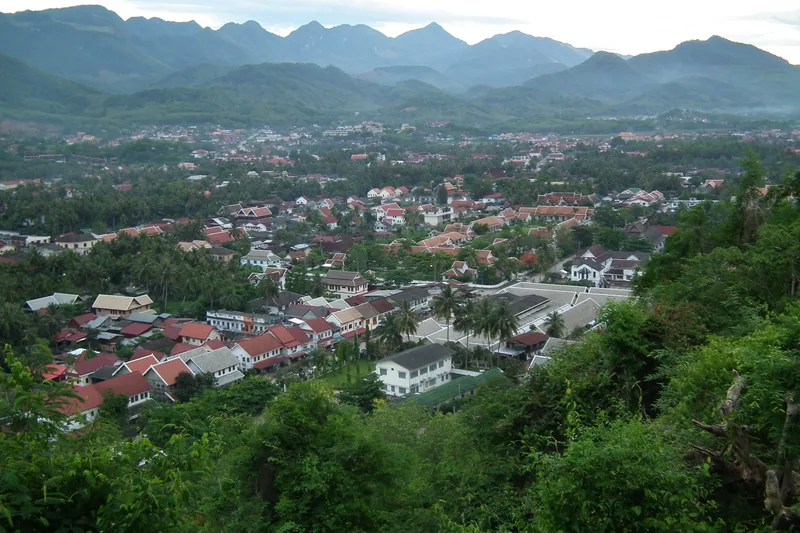
Nothing is scheduled. The town sits between the Mekong and the Nam Khan and the whole centre is walkable in forty minutes, which is the useful thing to do before dinner.
Day 2
Luang Prabang, town and Mekong
The run back downstream at 17:00, when the boatman cuts the engine for the last kilometre
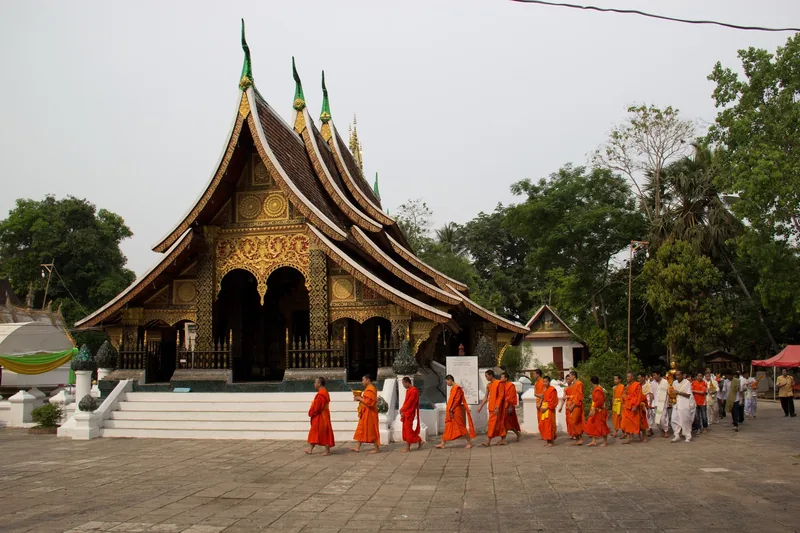
If you want to see the alms round, it is at about 05:40 and we will walk you to a place to stand. The rules are simple and our guide goes through them beforehand: stand back on the far pavement, no flash, do not step into the line, and do not buy the sticky rice that traders sell on the kerb to tourists who want to take part. It is a daily religious obligation, not a performance, and a third of the monks in that line are teenagers.
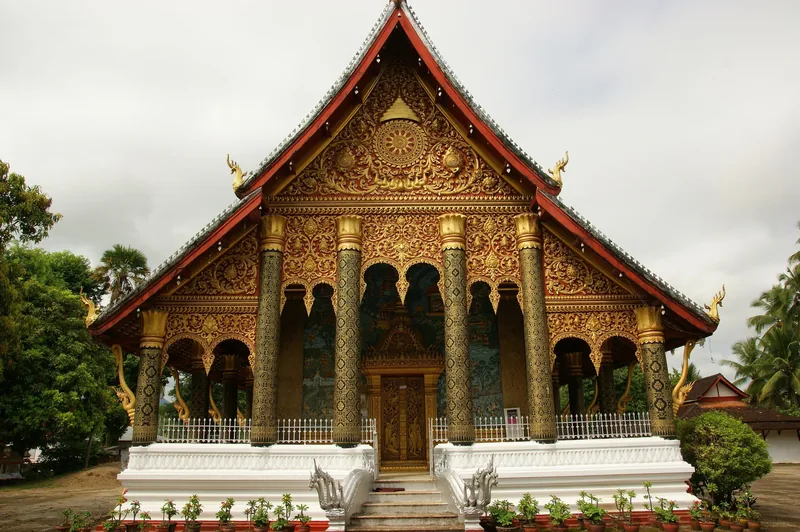
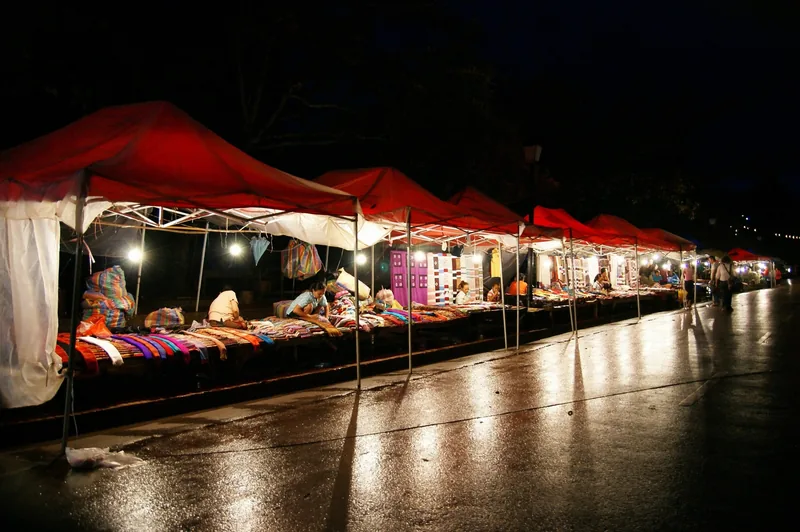
After breakfast, the morning market where the town actually shops, then Wat Xieng Thong at the tip of the peninsula, built in 1560 and the one building here that survived both the Black Flag raids and the century after them.
From 14:00 we take a longboat 25 kilometres upstream to the Pak Ou caves, two hours against the current and an hour and a quarter back with it. The caves hold something over four thousand Buddha images left by pilgrims across four centuries; the lower one is lit and the upper one needs the torch the boatman hands you.
Day 3
Kuang Si and a working weaving village
Out at 08:00 for the 29 kilometres to Kuang Si, about 45 minutes. Arriving before 09:00 means the lower pools are empty; the town starts arriving at eleven. The water sits at around 22 degrees year round, which is cold enough to be a decision rather than a dip.
A steep path climbs beside the main fall to the top, twenty minutes up on tree roots and wet rock, and is worth it if the weather has been dry. At the entrance there is a bear sanctuary holding Asiatic black bears taken from the bile trade, which takes fifteen minutes and is not a zoo.
Afternoon at Ban Xang Khong on the Nam Khan, where households weave and make saa paper. We use this village rather than the ones on the main tour circuit because the looms are still worked on days when no visitors come, and you can tell the difference within a minute of walking in.
Day 4
North to Nong Khiaw
140 kilometres north on Route 13 and then Route 1C, about four hours of mountain road with one stop. It is a beautiful drive and a slow one; the average speed for the whole leg is under 40 kilometres an hour and no amount of planning changes that.
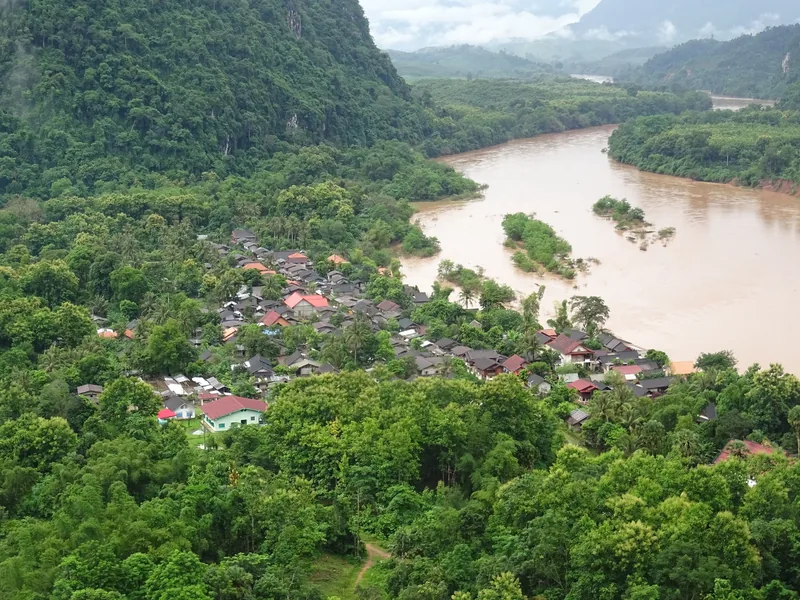
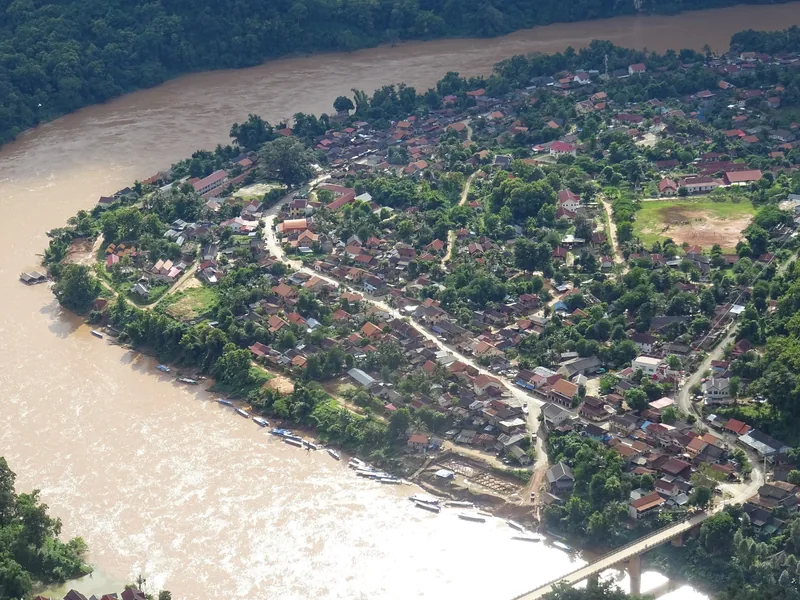
Nong Khiaw is a bridge, two riverbanks and limestone walls three hundred metres straight up on both sides. We arrive in time for lunch. The afternoon is free, and the one thing on offer is the climb to Pha Daeng Peak: an hour and a quarter up, six hundred-odd steps and some ladder sections, and the view is the reason the photographs of this place exist. The alternative is a chair on the riverbank, which is also correct.
Day 5
The Nam Ou, Muang Ngoi and the caves
The stretch of the Nam Ou above Nong Khiaw at 09:00, before the wind gets up
An hour upstream by boat to Muang Ngoi Neua, a village that had no road at all until 2013 and still treats the river as the way in. We walk an hour inland through rice fields to Ban Na, a Khmu village where lunch is cooked in someone's kitchen rather than a restaurant, then come back downstream in forty minutes.
On the way back we stop at the Pha Tok caves outside Nong Khiaw. The villagers of this valley lived in them between 1964 and 1973, coming out to farm at night, because the American bombing of northern Laos made daylight in the open dangerous for nine years. There is a bank office, a hospital cave and a school cave, all signposted in plain language, and it takes half an hour.
Back in Nong Khiaw by mid-afternoon with nothing else scheduled.
Day 6
Across to the Xieng Khouang plateau
The long day, and we would rather you read it here than discover it at breakfast. 285 kilometres from Nong Khiaw to Phonsavan: down to Pak Mong, south on Route 13 over the Phou Khoun pass at about 1,400 metres, then east on Route 7. Eight hours including a lunch stop and two leg-stretches.
The road is paved and the drive is genuinely good — you climb out of the Nam Ou valley and cross ridge after ridge of upland villages — but it is eight hours of bends and anyone prone to car sickness should say so before we book, because the front seat matters. We leave at 07:30 and arrive in time for a late afternoon walk around Phonsavan, which is a plain grid of a town rebuilt after the war and makes no attempt to charm anyone.
Day 7
The Plain of Jars, and what is under the grass
Site 3 at 08:30, walking in through rice fields with nobody else on the path
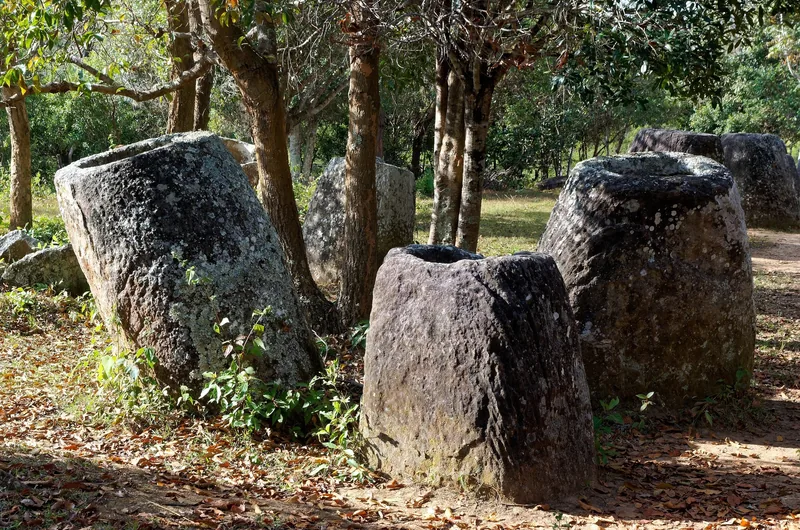
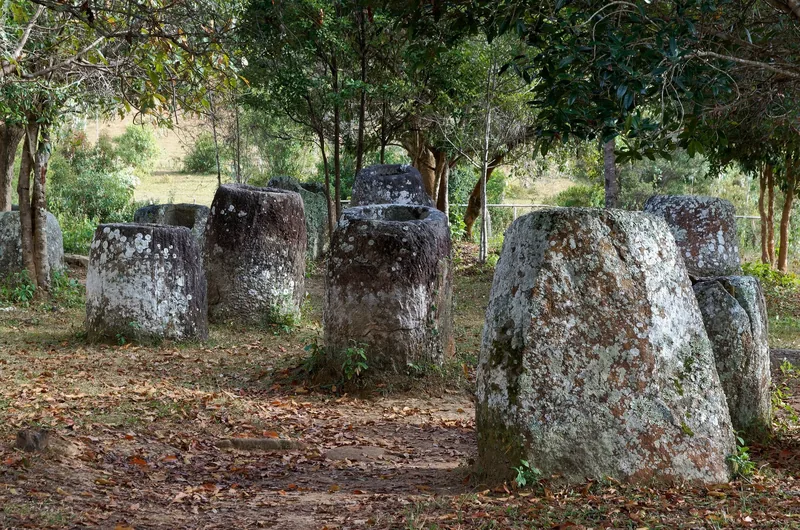
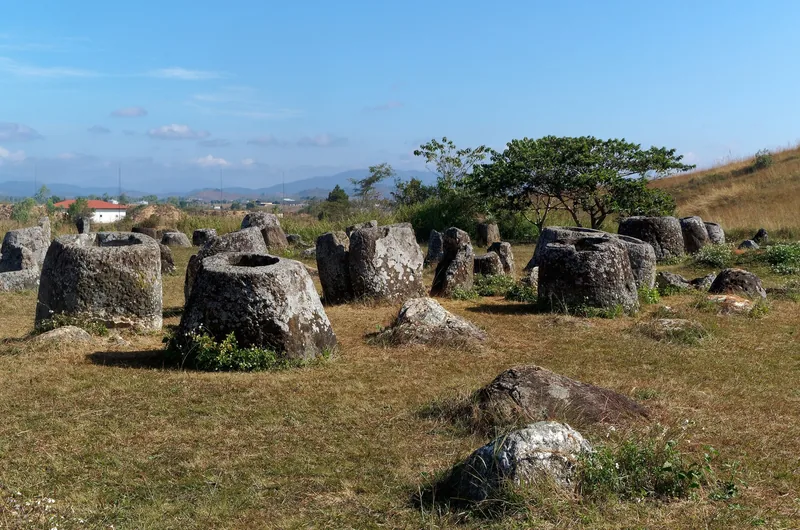
Three sites, all of them Unesco-listed since 2019. Site 1 is ten kilometres from town and holds around 330 stone jars, the largest over two metres and several tonnes; Site 2 sits on two wooded hills 25 kilometres south; Site 3 is 35 kilometres out and reached by a kilometre of path through working rice fields, which is the one most people remember. The jars are roughly two thousand years old and were almost certainly funerary. Nobody has a better answer than that.
The other half of this day is unavoidable and we do not skip it. Between 1964 and 1973 Laos had more than two million tonnes of ordnance dropped on it, including something like 270 million cluster submunitions, of which up to a third failed to go off. Xieng Khouang is the worst-contaminated province in the worst-contaminated country in the world per head. At the jar sites you walk between concrete markers set by clearance teams: white face means cleared ground, red face means it is not, and you stay on the cleared side. Bomb craters are visible in the grass between the jars.
Late afternoon at the MAG and UXO Lao information centre in Phonsavan, which explains what clearance work actually involves and what it costs to do a hectare. It takes forty minutes and it changes how the morning reads.
Day 8
Down to Vientiane
Lao Airlines flies Xieng Khouang to Vientiane in about forty minutes, usually three or four times a week. When the schedule works we use it and quote the fare at cost. When it does not, the alternative is Route 13 south, 380 kilometres and close to ten hours, and we will tell you which one you have before you pay a deposit rather than on the morning.
Flying puts you in Vientiane by early afternoon. Wat Si Saket, finished in 1824, is the only temple in the city the Siamese army left standing four years later, and its cloister walls hold about 6,800 Buddha images in niches. Then the COPE visitor centre, which fits prosthetic limbs for people injured by the ordnance you were standing among yesterday, and which is the reason we put these two days in this order.
Day 9
Depart Vientiane
Free until your transfer. Wattay airport is four kilometres from the centre, twenty minutes at any hour, and we ask for two and a half hours before an international departure. If you have a late flight, the morning market and the Buddha Park 25 kilometres downstream both fit.
What it costs
| Party size | Our usual standard | Top end |
|---|---|---|
| 2 travellers, private | USD 2,690 | USD 3,940 |
| 4 travellers, private | USD 2,180 | USD 3,290 |
| 6 or more, private | USD 1,940 | USD 2,980 |
| Set departure, 4 – 12 | USD 1,940 | — |
Included and not
What the price includes
- Eight nights as described, twin or double, at the standard shown
- Private air-conditioned vehicle and driver for every land transfer
- English-speaking Lao guide on days 2, 3, 5, 7 and 8
- Private longboat on the Mekong to Pak Ou and on the Nam Ou to Muang Ngoi
- The Xieng Khouang to Vientiane flight at cost, or the road day if the flight does not run
- All entrance fees in the day plan, including the three Plain of Jars sites
- Breakfast daily plus the seven lunches marked in the day plan
- One number in Laos, answered 24 hours, for the whole trip
What it does not include
- International flights into Luang Prabang and out of Vientiane
- Lao visa, currently USD 30 to USD 42 on arrival depending on passport
- Travel insurance, which is a condition of travelling with us
- All dinners, drinks and laundry
- Tips for guides, drivers and boatmen
Pictures from the route
When this trip is the wrong one
- Eight hours in a vehicle on day six is more than you will accept. There is no shorter way to the Plain of Jars by road, and the flight from Luang Prabang is too unreliable for us to build a trip on.
- You need consistent four-star rooms. Nong Khiaw and Phonsavan do not have them; the best beds in both places are clean, simple and priced accordingly, and no amount of money changes that.
- You are travelling between June and September and cannot lose a day. Landslides close sections of Route 13 and 1C most wet seasons, sometimes for a full day, and the Nam Ou runs high and brown.
- You want things to do in the evening. Nong Khiaw has one street, most kitchens stop at 21:00, and card payment is unreliable outside Luang Prabang and Vientiane.
- You want the south — Champasak, the Bolaven plateau, the four thousand islands. None of it is on this route and reaching it properly needs another five days.
Common questions
Questions travellers ask most
Is the drive to Phonsavan really eight hours?
Yes, and we have stopped rounding it down. It is 285 kilometres of mountain road with an average speed under 40 kilometres an hour, plus a lunch stop. We leave at 07:30 and arrive between 15:30 and 16:00.
The alternative people ask about is the Luang Prabang to Xieng Khouang flight, which would mean backtracking from Nong Khiaw and then relying on a route that is cancelled often enough that we will not build an itinerary around it.
How do we watch the alms round without being part of the problem?
Stand on the opposite pavement, stay seated or low if you are close, no flash, and do not buy rice from the kerbside sellers to offer yourself unless you are a practising Buddhist and have arranged it properly through your hotel.
Our guide walks you to a spot away from the main tourist stretch on Sakkaline Road and explains this before you go out, at about 05:20. If it still feels intrusive when you are standing there, leaving is the right answer and nobody minds.
How dangerous is the unexploded ordnance?
On this itinerary, very low risk. The jar sites are cleared and marked, the paths between them are cleared, and you stay on them. The people who are hurt are farmers opening new ground and children who pick things up, roughly forty to sixty casualties a year nationally in recent years, down from several hundred in the 1990s.
The practical rule is the one the markers state: walk on the white side of the marker, never step off a path at a jar site, and do not touch metal objects on the ground anywhere in the province.
Could this be done in seven days?
Only by dropping either Nong Khiaw or the Plain of Jars, and both cuts leave a worse trip than a shorter one elsewhere. Luang Prabang, Kuang Si and the Mekong make a decent five-day trip on their own, and we will price that instead rather than compress this.
Related
Read next
Vietnam · Cambodia · Laos
Tours
Every journey we operate, with days, group size and starting price.
View journey
Tours
Prices
Price ranges, a supplier-level breakdown, and how a cheap quote is made cheap.
View journey
Tours · Booking
How to book
The whole booking process, with the deposit rules and the deadlines.
View journey
Example itinerary — fully customizable
Classic Indochina
Fifteen days, three countries, nothing shorter than a two-night stop.
View journey
Laos · The north
Luang Prabang
Northern Laos: monasteries, the Mekong, and the slowest good town in the region.
View journey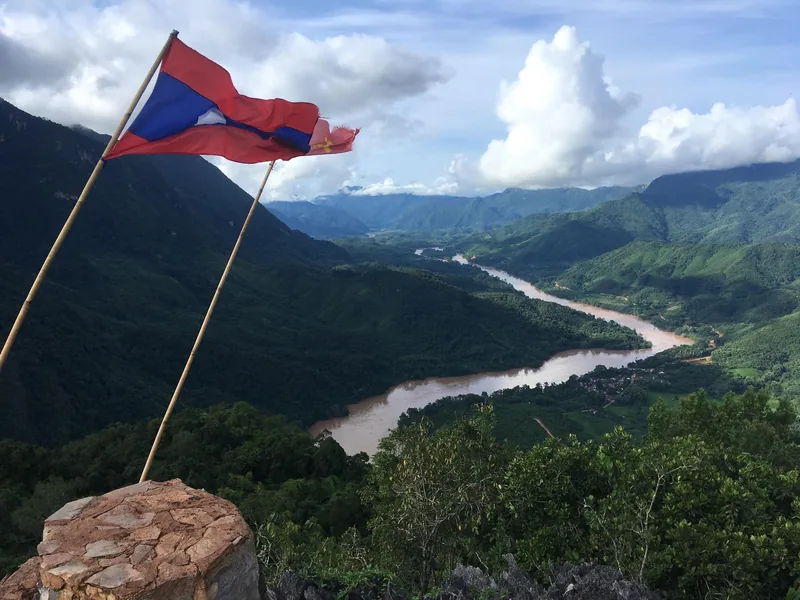
Destination guide
Laos
One river, one small town, and the case for staying longer.
View journey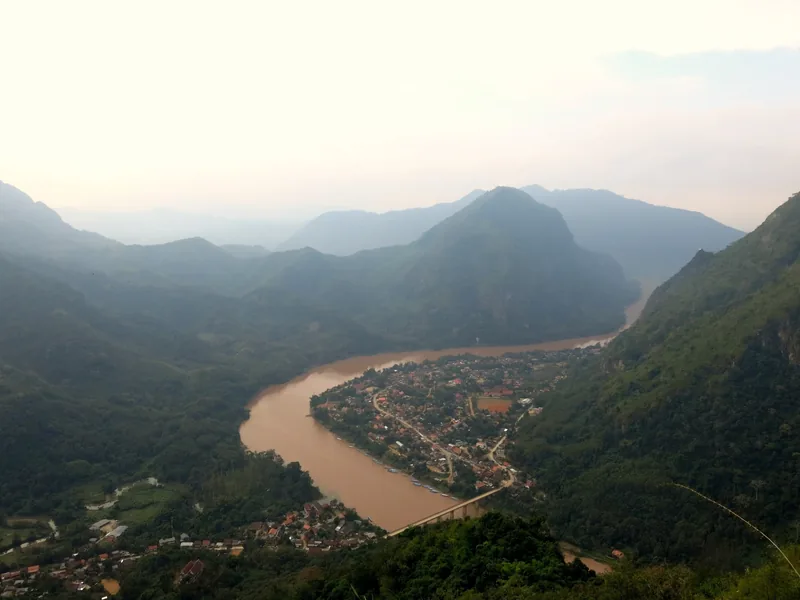
Start planning
Tell us about the journey you have in mind
Dates, party size and the places you care about are enough to start. You get a draft route and an indicative price, not a brochure.
Prefer to talk? WhatsApp or call+84 766 019 399