
 Indochina destination specialist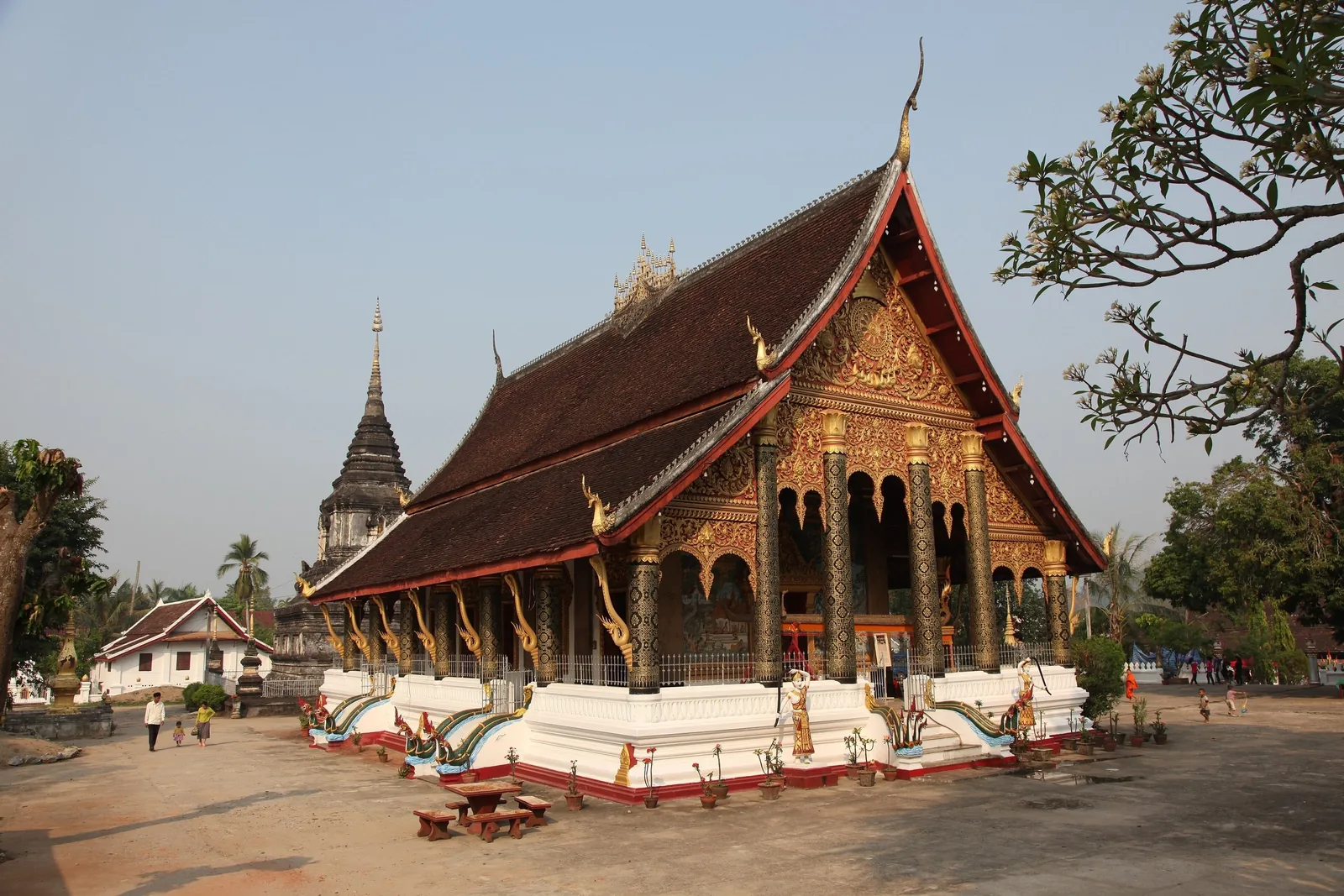
Laos · The north
Luang Prabang, at its own pace
A town of fifty-odd thousand people on a peninsula between the Mekong and the Nam Khan, holding more than thirty working monasteries inside about a square kilometre. The point of it is the pace, which means a trip built around ticking things off will fail here.
At a glance
What Luang Prabang actually is
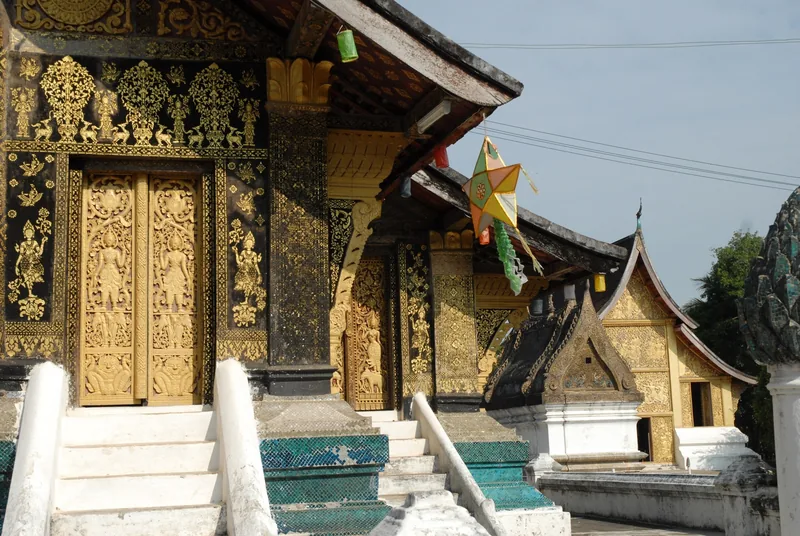
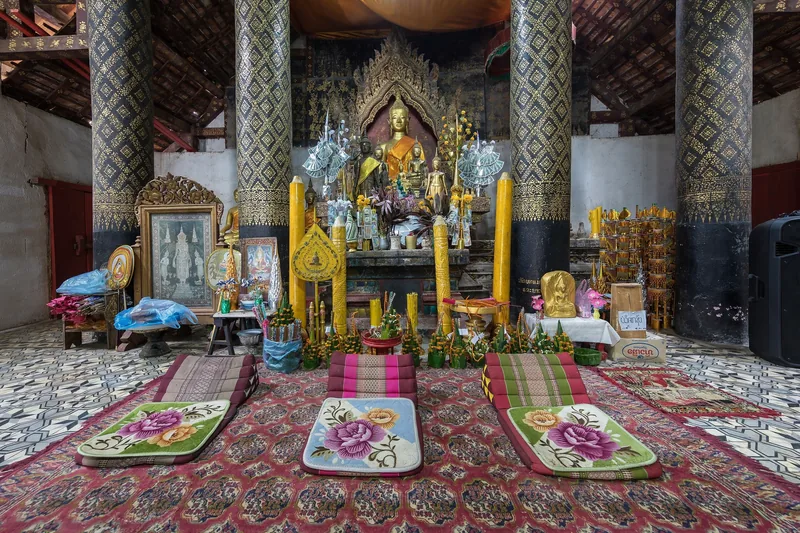
The old town sits on a finger of land where the Nam Khan runs into the Mekong. It was a royal capital, it has been a protected site since 1995, and the protection has held better here than in most places: the buildings are still one and two storeys, still timber and lime-washed brick, and the monasteries inside them are working ones with novices living in them rather than museums with ticket desks. The whole of it can be walked end to end in half an hour, which is a large part of why it works.
The town has changed in one specific way that is worth saying plainly. Sisavangvong, the main street, becomes a night market from about 17:00 to 22:00, and most of the ground floors along it are now cafes, boutiques and travel desks. Rents pushed a number of families off the peninsula and out to the newer districts. It is still a town rather than a stage set, but the peninsula is the part where a visitor economy has clearly won.
The alms round is where honesty matters most. Before dawn, monks from the monasteries walk the streets collecting rice, and it is a daily religious obligation rather than an event. It has been damaged by the way it is watched: coach parties, flash photography at close range, vendors selling sticky rice of poor quality to tourists who then offer it, and cameras a metre from the faces of teenage novices. Several monasteries have asked visitors to keep their distance, and some have shortened or altered their route. Watch it from across the street, without flash, and do not offer food unless a monastery has arranged it for you. If that sounds like a lot of conditions, the correct response is not to go, and that is a perfectly good answer.
What the town is good at: mornings on the river, the textile workshops, which are genuinely skilled and not a demonstration; Wat Xieng Thong, which is the best single building in Laos; the walk up Phousi, three hundred and twenty-eight steps, worth doing at 07:00 and not at sunset when it is shoulder to shoulder; and the fact that everything closes early, which forces a kind of day most travellers have not had in years.
How many nights, and why two breaks it
Three nights. A town this small needs time precisely because there is not much to tick off.
One day goes to the town on foot: the monasteries in the cool hours, the palace museum, the peninsula tip where the rivers meet, and the afternoon doing very little. One day goes to Kuang Si, twenty-nine kilometres south, which deserves a whole morning rather than the ninety minutes a shared van gives it, plus a weaving village on the way back. One day goes upriver to the Pak Ou caves by boat, four hours return with the current helping on the way back, which is the best hours on the Mekong anywhere in the region.
Two nights forces you to choose between Kuang Si and the river, and people who make that choice usually regret whichever way they made it. It also means one dawn instead of two, and the mornings here are the good part of the day.
A fourth night is worth taking if you want a slow river day to Nong Khiaw or an overnight upriver. Beyond four nights, most people are simply having a rest, which is a legitimate use of the town and something we build in deliberately after a hard first week.
When to go
1 = haze or heavy rain · 2 = workable · 3 = the months we would pick
| Months | Daytime range | Conditions | What it is actually like |
|---|---|---|---|
| November to February | 15 – 28 °C | Dry, clear | The best window. Mornings at 13 to 16 degrees in December and January; take a jacket. |
| March to April | 22 – 38 °C | Smoke haze | The burning season: agricultural fires across the north cut visibility and air quality for weeks. Flights are occasionally delayed by it. |
| May to July | 24 – 34 °C | Rain building | Green, warm, afternoon storms. Waterfalls strengthen, prices drop. |
| August to September | 24 – 32 °C | Wettest | The rivers run high and brown, road surfaces in the hills suffer, and Kuang Si is at full flow. |
| October | 22 – 31 °C | Clearing | Underrated. Rain easing, everything green, and the haze months are a long way off. |
From roughly early March to late April, fields and hillsides across northern Laos and neighbouring provinces are burned before planting. The valley holds the smoke, visibility drops to a few kilometres, air quality is frequently poor, and photographs come out flat and grey. It is the one period we will actively advise you to move if your dates are flexible, and almost no brochure mentions it.
Getting here
Luang Prabang is easier to reach than it was. The airport is four kilometres from the peninsula and the railway opened in 2021, which changed the overland journey from a day to two hours.
| Route | Time | Rough cost |
|---|---|---|
| Airport to the old town, by car | 10 min, 4 km | USD 7 – 12 |
| Vientiane by train | 1 h 50 – 2 h | USD 15 – 30 per person |
| Vientiane by road | 8 – 9 h, 340 km of mountain road | USD 180 – 230, the car |
| Hanoi by air | 1 h | USD 120 – 220 one way |
| Bangkok by air | 2 h | USD 130 – 260 one way |
| Chiang Mai by air | 1 h 10 | USD 110 – 200 one way |
| Siem Reap by air | 2 h, usually one stop | USD 180 – 320 one way |
| Huay Xai by slow boat down the Mekong | 2 days with a night at Pakbeng | USD 35 – 120 per person |
| Kuang Si falls from town | 45 min, 29 km | USD 30 – 45 return, the car |
The railway station is about twelve kilometres out of town, which people forget when they are calculating a tight connection; add half an hour each way. Trains sell out days ahead in the high season and seats are not held for late bookers.
What things cost on the ground
| Item | Typical price | Note |
|---|---|---|
| Guesthouse on or near the peninsula, per night | USD 25 – 45 | Simple, clean, fan or basic air conditioning |
| Good boutique hotel, per night | USD 70 – 150 | Where most of our guests stay |
| Heritage property, per night | USD 200 – 450 | A short list of converted colonial and royal buildings |
| Noodle soup for breakfast | USD 1.50 – 2.50 | At the morning market, not on the main street |
| Restaurant dinner, per person | USD 10 – 20 | Laotian and French, both done well here |
| Beerlao, a large bottle | USD 1.50 – 2.50 | Cheaper than water in some places |
| Kuang Si falls entry | About USD 1.20 | Plus a small charge at the bear sanctuary inside |
| Phousi hill entry | About USD 1 | 328 steps; go at 07:00 |
| Royal Palace Museum | About USD 1.50 | Closed Tuesdays, no bags or cameras inside |
| Private boat to Pak Ou caves, return | USD 25 – 45 | The whole boat, about four hours |
| Half-day weaving or dyeing workshop | USD 25 – 40 | Working studios, not a demonstration |
Prices are quoted in kip and in dollars. The kip has lost a great deal of value in recent years, so any figure you read in an older guidebook will be wrong; ask the current rate on arrival and expect the dollar prices to be the stable ones.
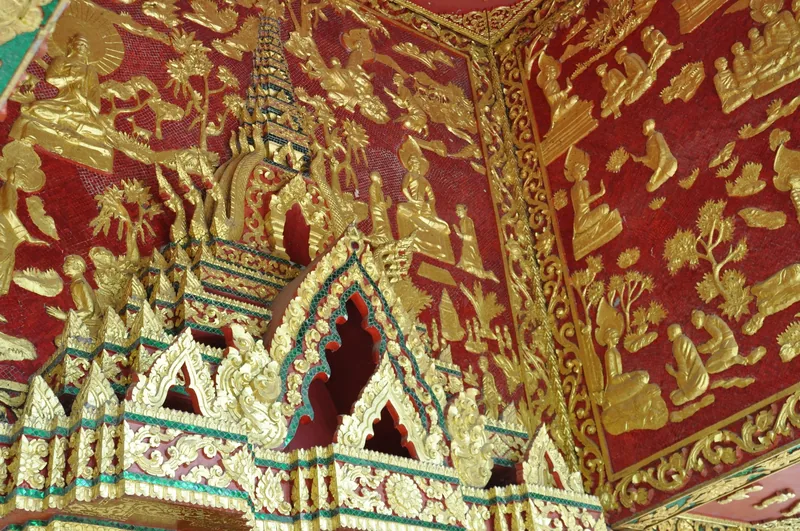
Luang Prabang in five frames
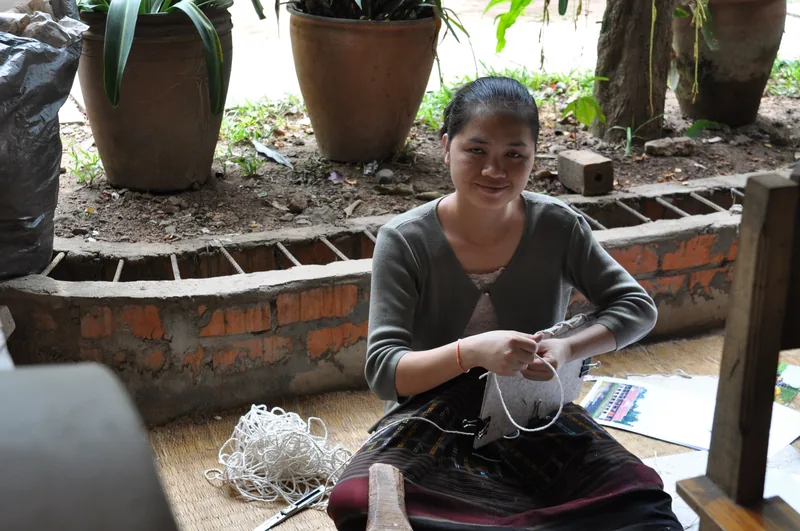
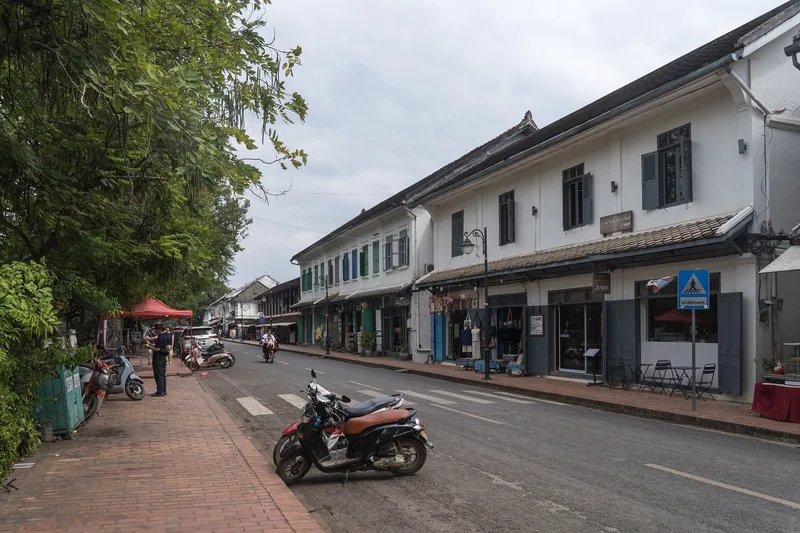
Trips that stop here
Luang Prabang gets three nights on the Classic Indochina route, placed after central Vietnam and before Angkor precisely because it is the slow middle that makes the rest survivable.
If Laos is the whole trip, the nine-day northern Laos route uses the town as a base and then goes upriver to Nong Khiaw, which is where the country stops being a stop on someone else’s itinerary. Walkers usually pair it with the northern Vietnam walking route across the border.
Plan My Trip
Nine days, and no day of it rushed
Northern Laos at the pace the place actually works at, with the day plan and the price table on the page.
When to skip Luang Prabang
- Your dates fall in March or April and you cannot move them. Weeks of smoke haze take the views, the light and some of the air quality, and nobody can plan around it.
- You want a busy evening. Most of the town is closed by 22:00 and the bars shut not long after; this is the opposite of a nightlife destination and it is not apologising for it.
- You have two nights in Laos and want to see the country. Two nights here is one choice between the waterfall and the river, and Laos will read as a pretty stop rather than a place.
- Steps and heat are a problem. Phousi is 328 steps with no lift and the monastery thresholds are high; the town itself is flat and easy, the two best viewpoints are not.
- You are collecting sights rather than time. There are about six things to see here and the value is in the hours between them, which is exactly the wrong shape of trip for someone on a tight schedule.
Common questions
Questions travellers ask most
Should I watch the alms round?
Only from a distance, without flash, standing across the street and not kneeling in the line. Do not buy rice from the street vendors to offer, because the quality is poor and the monks cannot refuse it. If any of that feels uncomfortable, skip it entirely and go to the morning market instead, which starts at the same hour and is a better window on the town anyway.
Is the train from Vientiane better than flying?
For most people, yes. It takes about two hours, it is comfortable, and it climbs through country you cannot otherwise see. Build in the transfer to the station, which is twelve kilometres out, and book several days ahead in high season because the trains do sell out.
Can I do Kuang Si and Pak Ou on the same day?
Physically yes, and it is a wasted day. They are in opposite directions, both are river-paced, and compressing them means two hours of driving in the middle and neither done properly. It is the clearest argument for the third night.
Is Luang Prabang expensive compared with Vietnam?
Hotels cost roughly the same, food costs a little more because much of it is imported, and internal transport is markedly more expensive because the distances are long and the roads are slow. The saving is that you need fewer moving parts here than anywhere else in the region.
Related
Read next
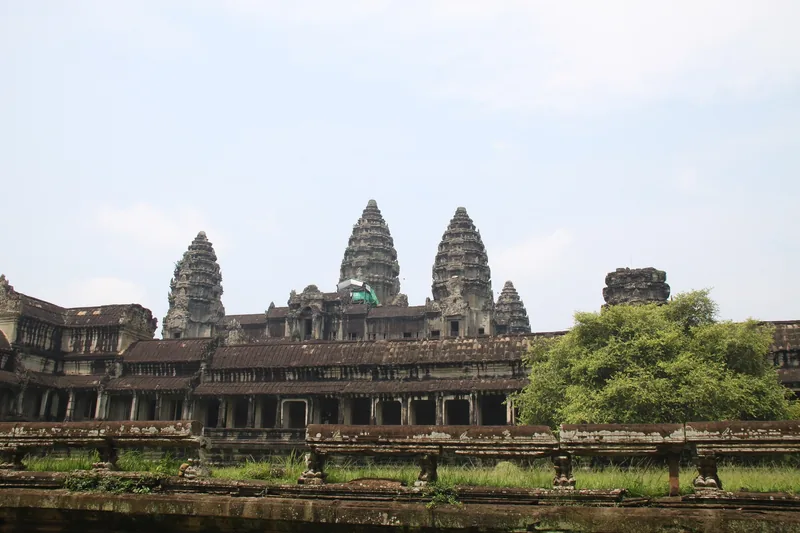
Cambodia · Angkor
Siem Reap
Cambodia: the Angkor temples, and the town that grew around them.
View journey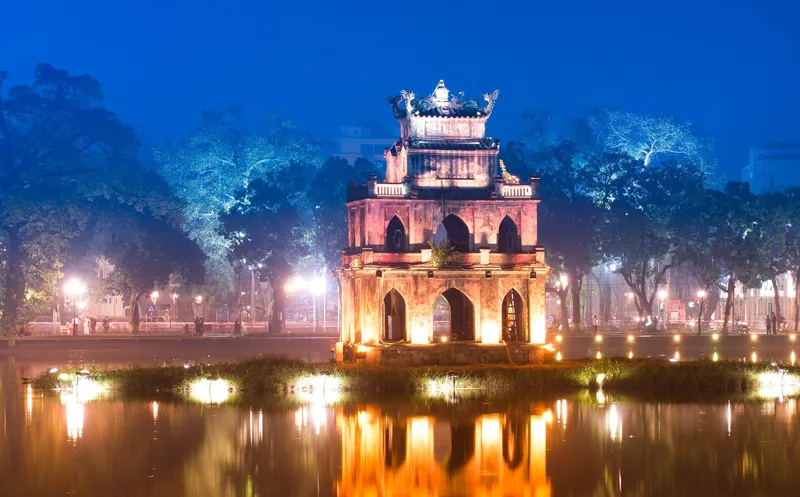
Vietnam · Red River delta
Hanoi
The capital of Vietnam: old quarter, lake, and the best street food in the country.
View journey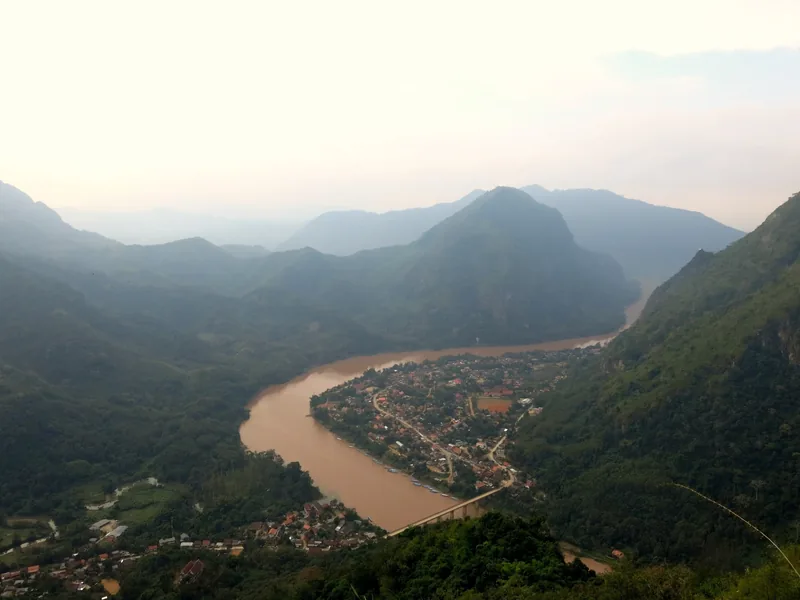
Example itinerary — fully customizable
Northern Laos, slowly
Nine days, four stops, northern Laos without a daily pack-up.
View journey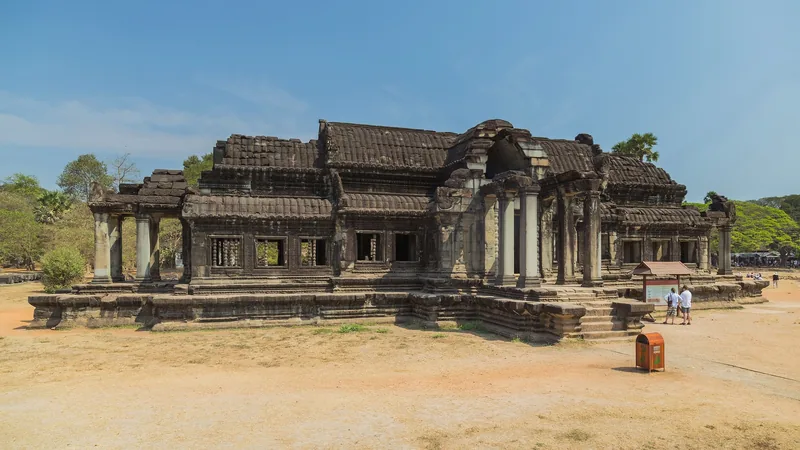
Example itinerary — fully customizable
Classic Indochina
Fifteen days, three countries, nothing shorter than a two-night stop.
View journey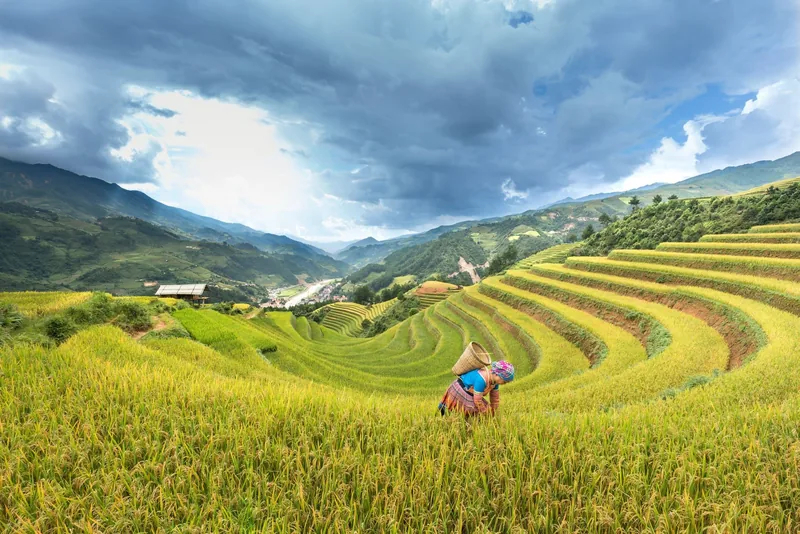
Planning
When to go
Month-by-month conditions across Vietnam, Cambodia and Laos, including what the quiet season is good for.
View journey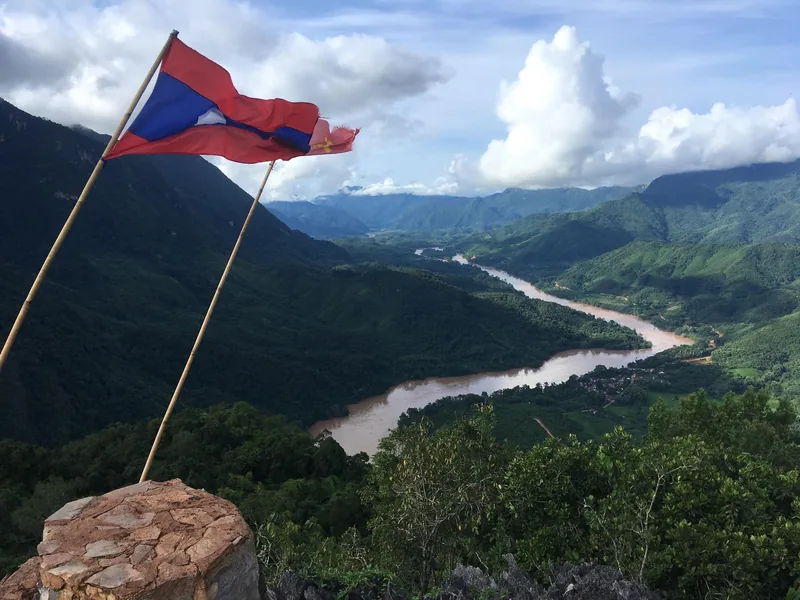
Destination guide
Laos
One river, one small town, and the case for staying longer.
View journey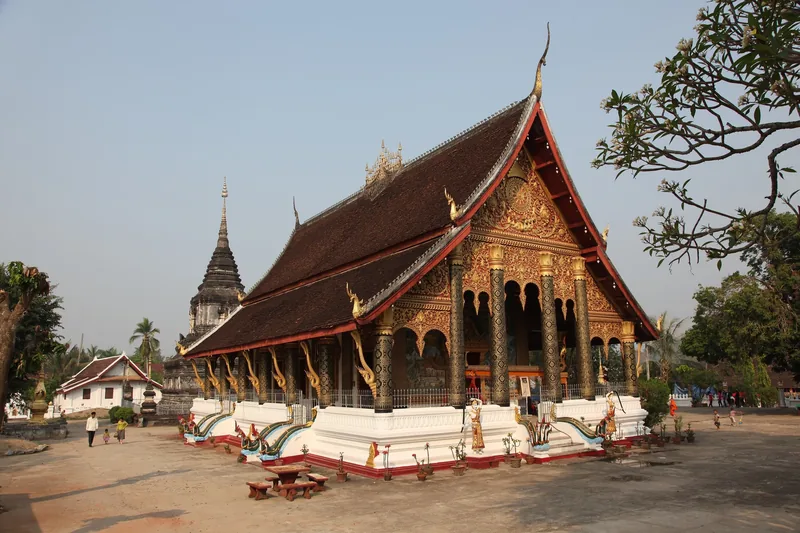
Start planning
Tell us about the journey you have in mind
Dates, party size and the places you care about are enough to start. You get a draft route and an indicative price, not a brochure.
Prefer to talk? WhatsApp or call+84 766 019 399