
 Indochina destination specialist
Vietnam · Red River delta
Hanoi, and the three nights it needs
A working city of roughly eight million people wrapped around a historic core you can walk across in forty minutes. The core is the reason to come, the rest is why the core still feels lived in rather than preserved.
At a glance
What Hanoi actually is
Hanoi holds about eight million people and something close to seven million motorbikes. Almost none of that is what you came for. The part a visitor uses is three adjoining districts: the old quarter north of Hoan Kiem lake, the French quarter east and south of it, and the ceremonial strip around the mausoleum and the citadel. Together they cover roughly four square kilometres. Everything beyond is ring roads, apartment towers and industrial suburbs, and that is where the people in your photographs go home to.
The old quarter is thirty-six short streets, each named for the trade once done on it. Some of the names still mean something. Hang Bac still sells silver, Hang Ma still sells paper offerings and turns gold and red for a fortnight before Tet and again before the mid-autumn festival. Others are now hotels and travel desks with the old name on the sign. Buildings are two to four storeys, three to four metres wide, thirty metres deep, because frontage was taxed. You will keep looking down corridors into courtyards that were not built for you to see.
Two parts of this have been worn through, and pretending otherwise wastes your time. The first is Ta Hien, the beer corner, which after 19:00 is four blocks of plastic stools serving mainly foreigners at roughly double the price of the same beer two streets away. The second is the railway alley near Phung Hung, where cafes set up chairs against the track. It has been cleared by the authorities and quietly reopened more than once since 2019, and on the days it is open it is a queue of people waiting to photograph a train. Neither is a scandal. They are just not worth a slot in a three-day visit.
What is still worth the slot: the market end of the quarter between 06:00 and 08:00, when it is a wholesale operation and nobody is selling you anything; the Museum of Ethnology, seven kilometres west, which is the best museum in the country and the least visited of the big ones; the Thang Long citadel, half-excavated and more interesting for it; and Tay Ho, the lake district to the north, where Hanoians with money actually spend their evenings.
How many nights, and why two breaks it
Three nights. Here is the arithmetic rather than the assertion.
Long-haul arrivals land either between 06:00 and 10:00 or between 17:00 and 23:00. Both destroy a day: the morning arrival leaves you upright but useless by 15:00, the evening one costs the day outright. That is night one gone before anything starts.
The old quarter and the food need a full day on foot, and the ceremonial district plus the Ethnology Museum need most of another, because the mausoleum closes at 11:00 and the museum is a twenty-five minute drive away in traffic. That is two clear days. Two nights gives you one clear day, so something gets cut, and what gets cut is always the half that makes the city make sense.
A fourth night is worth it only if you use it to leave the city: Ninh Binh is a long day trip at an hour and three quarters each way, the Bat Trang ceramic villages are forty minutes, and Duong Lam village is ninety. Do not add a fourth night to see more of central Hanoi. You will have finished it.
When to go
1 = wet or uncomfortable · 2 = workable · 3 = the months we would pick
| Months | Daytime range | Rain | What it is actually like |
|---|---|---|---|
| October to early December | 21 – 28 °C | 90 – 140 mm/month | Clearest air of the year, low humidity, every outdoor thing works. Book early. |
| Mid December to January | 14 – 20 °C | 20 – 40 mm/month | Grey, dry, genuinely cold at night. Hotels are at their cheapest except around Tet. |
| February to mid March | 16 – 22 °C | Drizzle most days | The mua phun: fine drizzle, 85 to 95 per cent humidity, laundry does not dry. Cheap and quiet. |
| Late March to May | 24 – 33 °C | 100 – 200 mm/month | Warm and increasingly sticky, with the first big thunderstorms in May. |
| June to August | 29 – 38 °C | 250 – 320 mm/month | Hot, wet, storms after 15:00. Start at 06:00, stop at 10:00, go out again at 17:00. |
| September | 27 – 32 °C | 200 – 260 mm/month | Typhoon remnants reach the delta, but the light between them is the best of the year. |
The lunar new year falls in late January or February and moves each year. The city shuts for three to five days: most restaurants close, hotel and domestic flight prices rise sharply, and the streets are the emptiest you will ever see them. Some people travel specifically for that. Most people should avoid it.
Getting here and getting out
Noi Bai is 35 kilometres north of the centre across the Nhat Tan bridge. Reckon 45 to 60 minutes outside rush hour and up to 80 minutes inside it, and add a further twenty if you are arriving on a Friday evening.
| Route | Time | Rough cost |
|---|---|---|
| Noi Bai airport to the old quarter, by metered taxi | 45 – 60 min | VND 350,000 – 450,000 (USD 14 – 18) |
| Noi Bai to the old quarter, airport bus 86 | 60 – 75 min | VND 45,000 (USD 1.80) |
| Ho Chi Minh City by air | 2 h 05 | USD 45 – 120 one way |
| Da Nang by air, for Hoi An | 1 h 20 | USD 35 – 95 one way |
| Hue by train, soft sleeper | 13 – 14 h overnight | USD 40 – 60 |
| Got pier for Lan Ha Bay, by road | 2 h 30, 130 km | USD 75 – 95 private car |
| Ninh Binh by road | 1 h 45, 95 km | USD 65 – 85 private car |
| Sapa by road on the expressway | 5 h 30, 315 km | USD 130 – 170 private car |
| Luang Prabang by air | 1 h | USD 120 – 220 one way |
| Bangkok by air | 1 h 50 | USD 90 – 220 one way |
Inside the city, ride-hailing apps work properly and a cross-town trip costs USD 2.50 to 5. The single metro line that visitors occasionally use runs from Cat Linh to Ha Dong and goes nowhere you need. Walking is the honest answer in the old quarter, and the hardest skill is crossing a road: move at a constant slow pace and do not stop, because the traffic is steering around your predicted position, not your current one.
What things cost on the ground
Land costs only, and nothing here is a tour price. This is what a day in Hanoi costs if you are paying for it yourself.
| Item | Typical price | Note |
|---|---|---|
| Three-star hotel, old quarter, per night | USD 35 – 60 | Ask for a room off the street; the quarter is loud until 23:00 |
| Good boutique hotel, per night | USD 70 – 130 | Where most of our guests stay |
| Top end, per night | USD 250 – 450 | A short list of heritage and international properties |
| Pho, at a street kitchen | USD 1.60 – 2.60 | Eat it before 09:00; the good pots are finished by then |
| Bun cha, lunch only | USD 2 – 3 | Charcoal grill, rarely served in the evening |
| Bia hoi, a glass | USD 0.40 – 0.80 | Brewed daily, drunk the same day |
| Mid-range restaurant dinner, per person | USD 12 – 20 | Without drinks |
| Temple of Literature | VND 70,000 (USD 2.80) | Open 08:00 to 17:00 |
| Thang Long citadel | VND 70,000 (USD 2.80) | Closed Mondays |
| Museum of Ethnology | VND 40,000 (USD 1.60) | Closed Mondays, 7 km west |
| Water puppet performance | VND 100,000 – 200,000 | 50 minutes, book the day before |
| Ho Chi Minh mausoleum | Free | Closed most afternoons and for maintenance in the autumn |
Hanoi in five frames
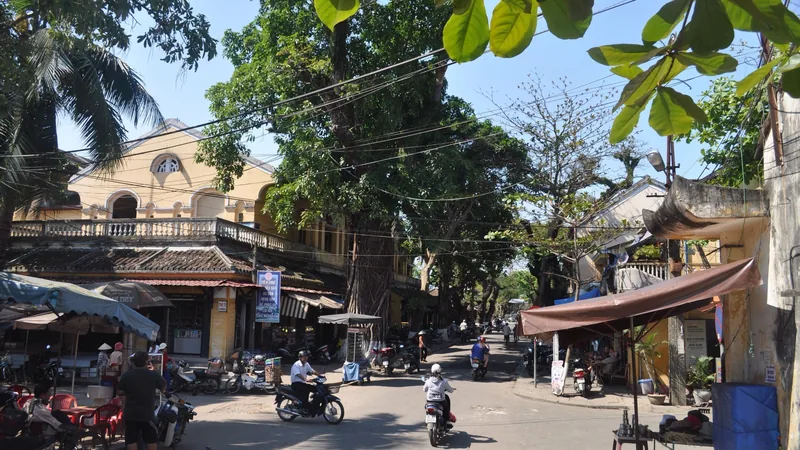


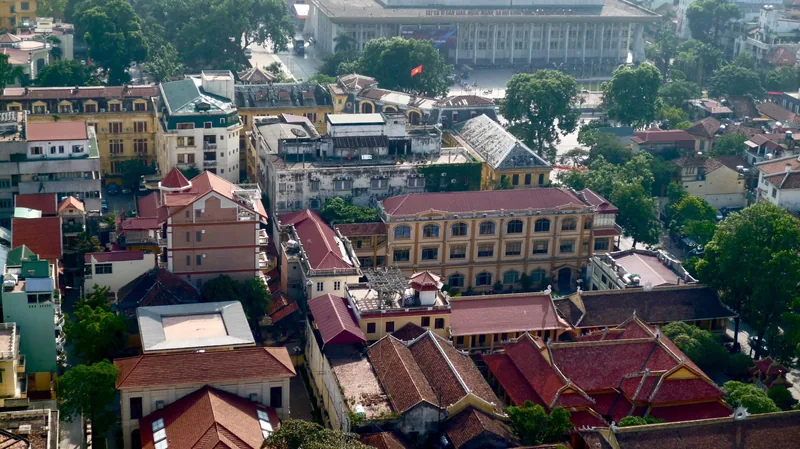
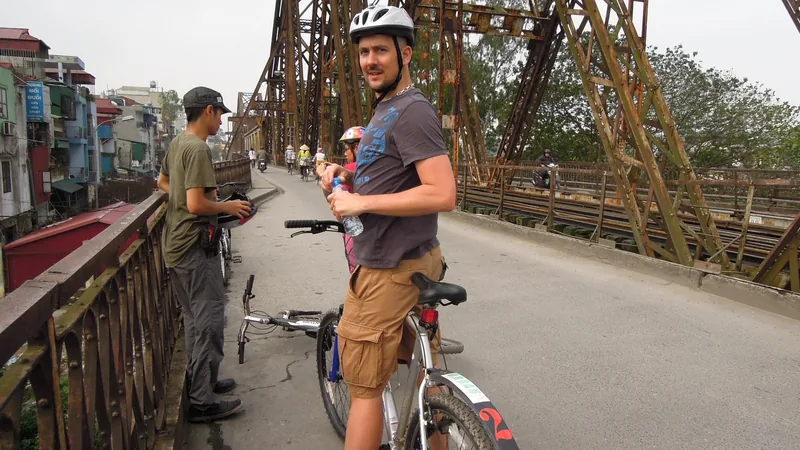
Trips that begin here
Hanoi is the start of almost everything we run in the north. The twelve-day Vietnam north to south route gives it three nights before going to the coast, and the fifteen-day Classic Indochina route does the same before crossing to Laos and Cambodia.
If you want the city as a base rather than a stop, the northern Vietnam walking route uses it at both ends, and the family route shortens the old quarter day and swaps the museums for the water puppets and a ceramics workshop.
Plan My Trip
Three nights here, then the bay
Twelve days from Hanoi to the Mekong delta, day by day, with the price table on the page.
When to skip Hanoi
- You have ten days or fewer and want beaches and Angkor. Hanoi is a city day, not a rest day, and it will not compete with what you have cut it against.
- Noise and traffic genuinely distress you. The old quarter is loud from 05:30, and the quiet hotels are outside the part you came to walk.
- You are arriving in late June, July or August and will not go out before 08:00. In 36 degrees at 80 per cent humidity the middle of the day is unusable, and a city visit that only happens at breakfast and dusk is a wasted two days.
- Your dates fall on the three days either side of Tet and you want restaurants and markets open. They will not be.
- Steps and uneven paving are a problem. Old-quarter pavements are parked on, broken and often twenty centimetres high, and there is no way to plan around that.
Common questions
Questions travellers ask most
Is three nights in Hanoi too many if I am also doing Ha Long or Lan Ha Bay?
No, because the bay trip eats the middle of two days rather than a whole one. A boat leaves the pier around noon and returns to it before noon two days later, so a three-night Hanoi stay plus one night aboard occupies five nights in total and still leaves two clear city days.
Which part of the city should I sleep in?
The old quarter if you want to walk out into it, which is most people, accepting the noise. The French quarter if you want wider streets and quiet, at the cost of a ten-minute walk each way. Tay Ho only if you are staying a week or travelling with small children who nap in the afternoon.
Is the street food safe?
At a busy stall, yes, and the busy ones are busy for a reason: the pot turns over in two hours. What causes trouble is not the food but iced drinks at quiet places and raw herbs washed in water you would not drink. Eat where the queue is local, and take the herbs cooked for the first two days.
Do I need a guide for the old quarter?
For a first morning, it pays for itself. The quarter does not explain itself to a visitor: the guild streets, the ancestral altars behind the shopfronts and the way a tube house works are invisible without someone pointing at them. After that morning most people are happy alone.
Related
Read next

Vietnam · Gulf of Tonkin
Lan Ha Bay
The southern anchorages of the Ha Long karst field, reached from Haiphong.
View journey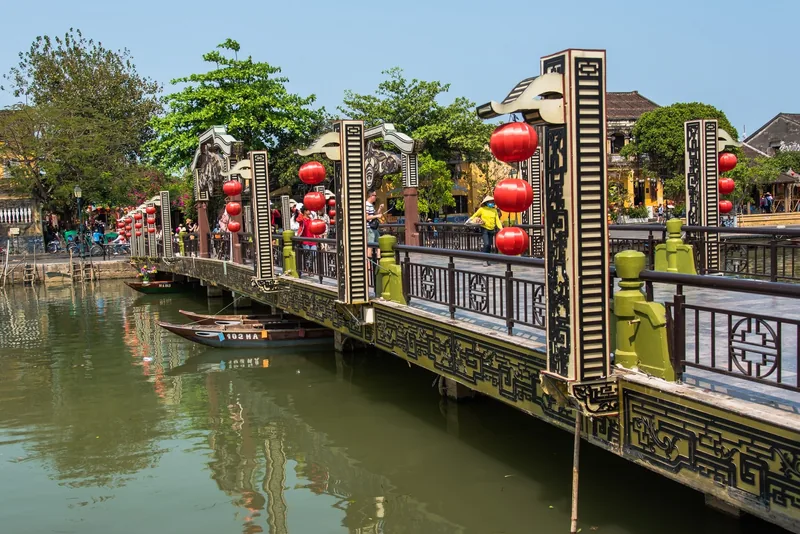
Vietnam · Quang Nam coast
Hoi An
Central Vietnam: preserved old town, tailors, river, and a beach fifteen minutes away.
View journey
Example itinerary — fully customizable
Vietnam north to south
Twelve days, one country, three climates and two internal flights.
View journey
Planning
When to go
Month-by-month conditions across Vietnam, Cambodia and Laos, including what the quiet season is good for.
View journey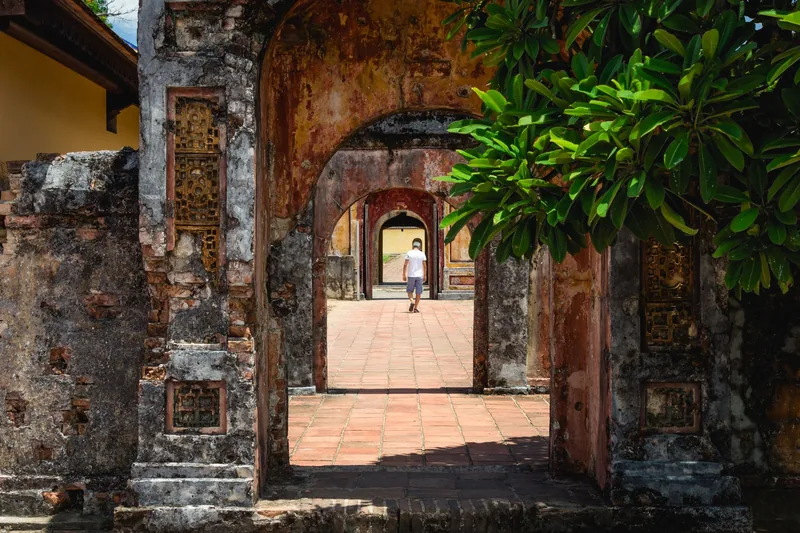
Planning
How many days
Realistic day counts for one, two and three countries, and the routes that do not work.
View journey
Destination guide
Vietnam
The long country: three climates, ten to fourteen nights, and where it is worn out.
View journey
Start planning
Tell us about the journey you have in mind
Dates, party size and the places you care about are enough to start. You get a draft route and an indicative price, not a brochure.
Prefer to talk? WhatsApp or call+84 766 019 399