
 Indochina destination specialist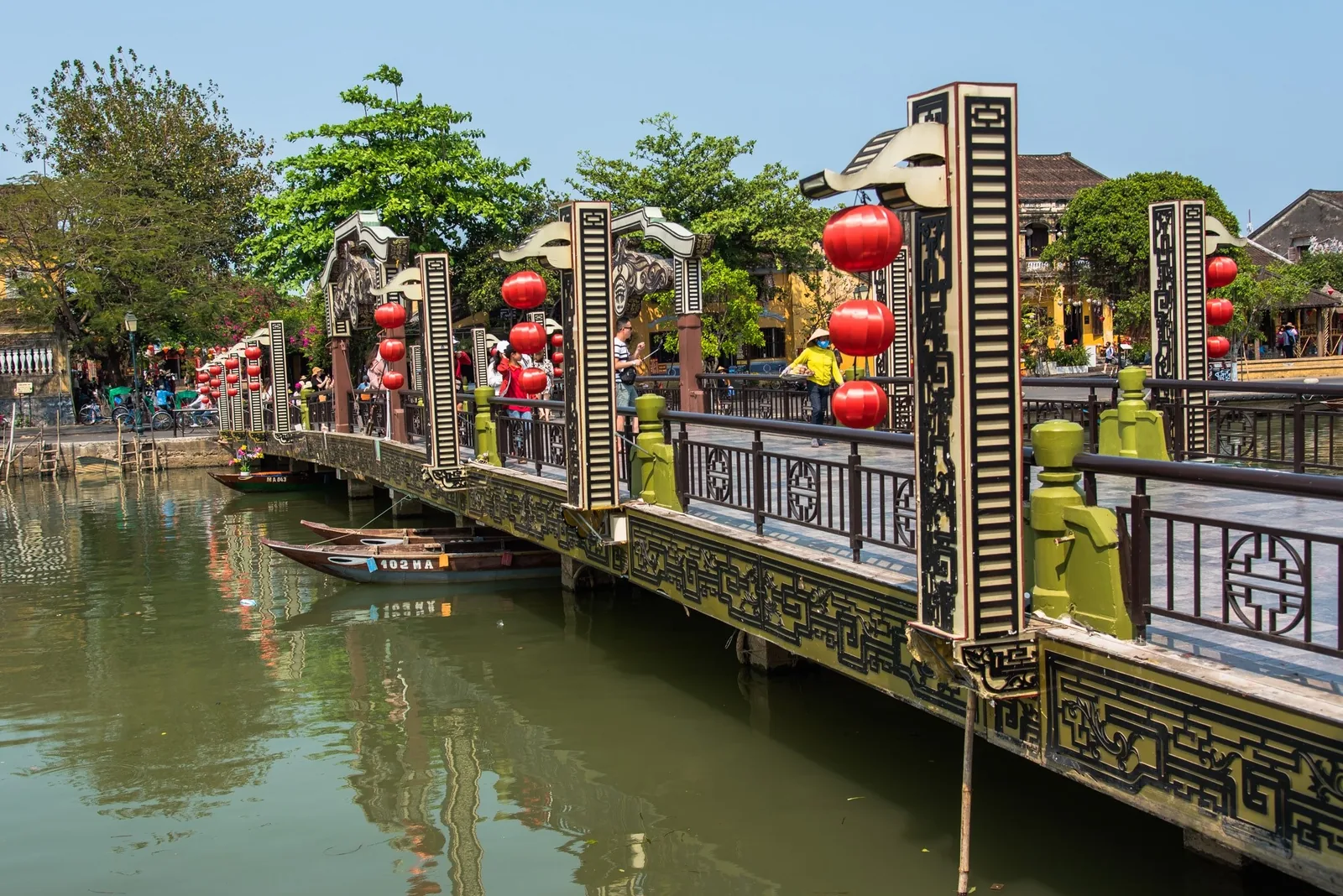
Vietnam · Quang Nam coast
Hoi An, and the hours that matter
A merchant port that stopped working in the nineteenth century and was therefore never rebuilt. About eleven hundred timber and brick buildings survive inside thirty hectares, which is why it is protected, and why it is busy.
At a glance
What Hoi An actually is
Hoi An was an international port from the sixteenth to the eighteenth century, trading with Japanese, Chinese, Dutch and Portuguese merchants. Then the Thu Bon river silted up, the trade moved thirty kilometres north to Da Nang, and the town went quiet for two hundred years. That is the only reason it still exists: nobody had any money to knock it down. What survives is roughly eleven hundred structures inside a protected core of about thirty hectares, timber-framed, tile-roofed, most of them still narrow trading houses with a shop at the front and a river door at the back.
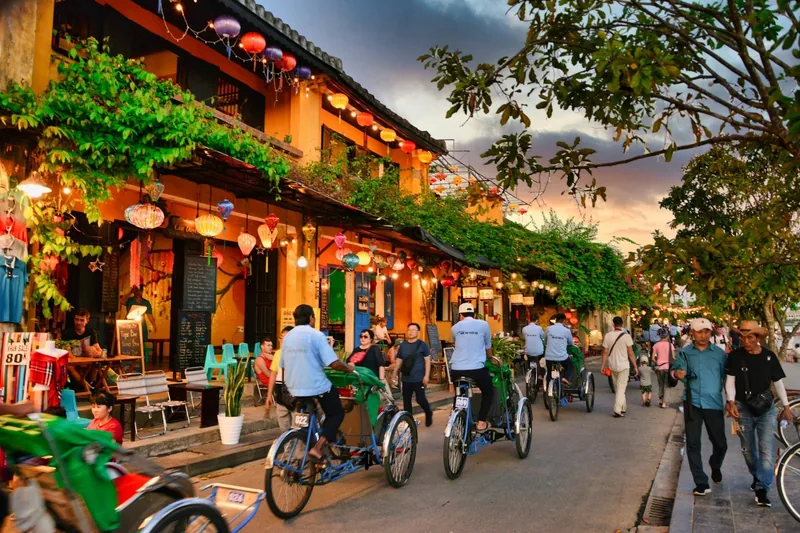
The town runs on a clock, and the clock is the single most useful thing to know about it. Between 06:00 and 08:30 the old town belongs to people who live there: the market is working, the streets are being washed, and you can photograph a two-hundred-year-old house without a stranger in it. Between 09:30 and 16:00 the coaches arrive from Da Nang and the cruise terminal and the lanes are full. From 17:00 the lanterns come on and it becomes a shopping and eating street, pretty and completely commercial, with a crowd density on the Japanese bridge that some people enjoy and some cannot stand.
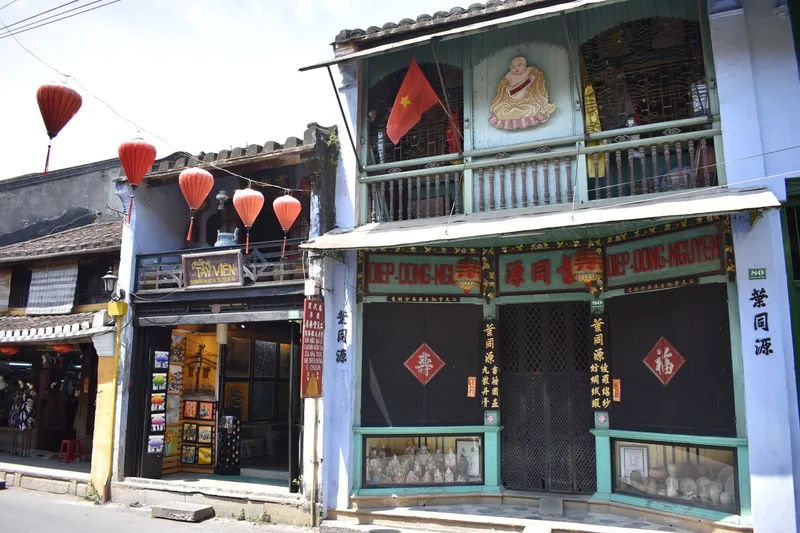
The honest part: the old town has more than four hundred tailors, dozens of near-identical lantern shops and a river frontage of restaurants with laminated menus. Nobody lives on the ground floor of the main streets any more because the rent is worth more as retail. An Hoi island opposite is now almost entirely bars and a night market. If your picture of Hoi An is a sleepy fishing town, adjust it before you arrive rather than after.
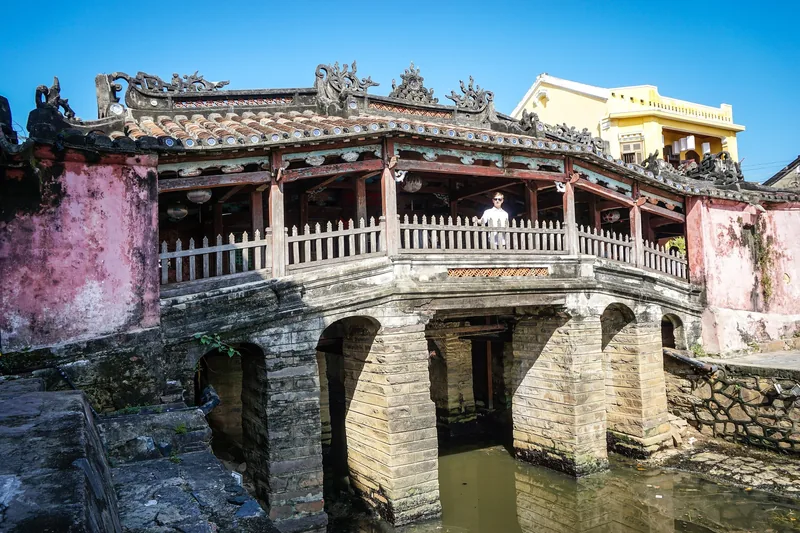
What still holds up: the assembly halls of the Chinese congregations, which are working temples and not exhibits; the covered bridge itself, small and strange and worth ten quiet minutes at dawn; the food, which is genuinely regional and not available in the same form elsewhere in Vietnam; the rice fields and water-coconut channels five minutes out by bicycle; and An Bang beach, which is a real beach with real swimming from March to September.
How many nights, and why two breaks it
Three nights. The reason is the clock rather than the list of sights.
You need two mornings before 08:30, because that is the only time the old town is the place people came to see, and one morning is a coin flip against weather. You need one full day for what is outside the town: My Son, forty-five minutes west, or the beach, or the boat down to the river mouth. And you need one afternoon doing nothing, because the middle of the day here is either 34 degrees or raining, and a schedule that ignores that produces exhausted people.
Two nights gives you one early morning and no slack. If you are also having clothes made, two nights is not enough for anyone: a shirt needs one fitting and twenty-four hours, a jacket needs two fittings and at least forty-eight, and every rushed tailoring story starts with a two-night stay.
A fourth night is easy to justify if you want the beach properly, and unusual to regret. Past five nights, most people start taking day trips to Da Nang and Hue, at which point moving hotel makes more sense than commuting.
When to go
1 = rain and flood risk · 2 = workable · 3 = the months we would pick
| Months | Daytime range | Rain | What it is actually like |
|---|---|---|---|
| February to April | 22 – 30 °C | 30 – 60 mm/month | The best window: dry, warm, not yet hot, sea warming through April. |
| May to July | 30 – 38 °C | 60 – 110 mm/month | Hot. Beach and pool weather, old town unusable between 11:00 and 16:00. |
| August | 29 – 35 °C | 100 – 150 mm/month | Still good, with short heavy showers. Our other preferred month for the coast. |
| September | 27 – 33 °C | 250 – 350 mm/month | The rain arrives properly, and the first typhoons are possible. |
| October to November | 23 – 30 °C | 500 – 700 mm/month | Wettest months in Vietnam. The Thu Bon floods the old town most years. |
| December to January | 20 – 25 °C | 200 – 250 mm/month | Cool, grey, persistent drizzle. Quiet, cheap, and no swimming. |
In most years the river comes over the quay into the old town at least once between early October and late November, sometimes by a metre or more. Shops move their stock upstairs, boats take people along Bach Dang street, and it is over in two or three days. It is not dangerous in the town centre and it is not a reason to cancel, but if your only three nights land in it you will spend them somewhere else, and you should know that before you book non-refundable flights.
Getting here
Hoi An has no airport and no railway station. Everything comes through Da Nang, thirty kilometres north, and the drive takes about forty-five minutes on a good road.
| Route | Time | Rough cost |
|---|---|---|
| Da Nang airport to Hoi An, private car | 45 min, 30 km | VND 350,000 – 450,000 (USD 14 – 18) |
| Hanoi to Da Nang by air | 1 h 20 | USD 35 – 95 one way |
| Ho Chi Minh City to Da Nang by air | 1 h 20 | USD 35 – 95 one way |
| Bangkok, Singapore or Seoul to Da Nang by air | 1 h 45 – 4 h 40 | Direct services most days |
| Hue to Hoi An over the Hai Van pass | 3 h 30 with stops, 130 km | USD 85 – 110, the car |
| Hue to Da Nang by train | 2 h 30 – 3 h | USD 6 – 12, the best rail hour in the country |
| My Son sanctuary from Hoi An | 45 min, 40 km | USD 45 – 60 return, the car |
| An Bang beach from the old town | 15 min by bicycle | Bicycle hire USD 2 per day |
Take the coast road over the Hai Van pass rather than the tunnel if the day is clear. It costs about forty minutes and it is the only part of the north to south drive that is worth doing for its own sake. In heavy rain the pass is cloud and nothing else, and the tunnel is the right choice.
What things cost on the ground
| Item | Typical price | Note |
|---|---|---|
| Garden hotel near the old town, per night | USD 45 – 90 | Most have a pool; the walk in is five to fifteen minutes |
| Riverside boutique, per night | USD 100 – 180 | Closer, quieter rooms cost more for a reason |
| Beach resort at An Bang or Ha My, per night | USD 180 – 400 | Fifteen minutes out, a different holiday |
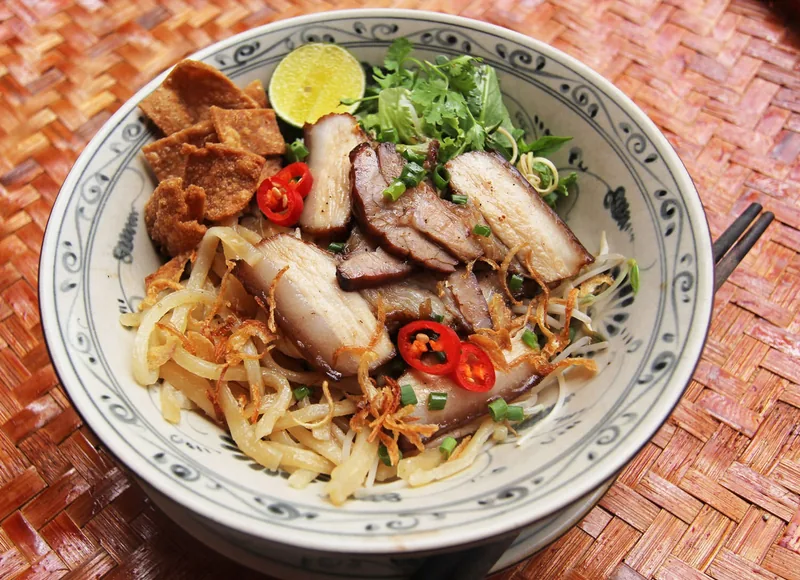
| Cao lau, the local noodle | USD 1.50 – 2.50 | Only made here, with water from a specific set of wells |
| Banh mi from a street counter | USD 1 – 1.60 | The queue tells you which counter |
| Restaurant dinner, per person | USD 10 – 18 | Riverfront costs a third more for the same food |
| Old town entrance ticket | VND 120,000 (USD 4.80) | Five heritage sites of your choice, valid several days |
| My Son sanctuary | VND 150,000 (USD 6) | Includes the shuttle and the dance performance |
| Cooking class, half day | USD 30 – 45 | Market, boat and four dishes, in most versions |
| A tailored shirt | USD 30 – 60 | Below that the cloth is the compromise |
| A tailored jacket | USD 120 – 300 | Two fittings and forty-eight hours, or do not start |
Hoi An in five frames

Trips that stop here
Hoi An gets three nights on the Vietnam north to south route and three on the Classic Indochina route, in both cases arriving over the Hai Van pass from Hue rather than flying into Da Nang.
Families tend to want the beach half of the town rather than the museum half, and the eleven-day family route is built that way: old town early, pool in the middle of the day, basket boats and a cooking class instead of a second set of heritage houses.
Plan My Trip
Three nights here, in a twelve-day route
Hanoi, Lan Ha Bay, Hue, Hoi An and the Mekong delta, with the price table on the page.
When to skip Hoi An
- Your dates are fixed in October or November and a flooded or rained-out town would ruin the trip. Move the nights to Da Nang or south to Nha Trang instead.
- Crowds in a confined space are your limit. Between 10:00 and 16:00 in high season the main lanes are shoulder to shoulder, and no guide can route around it.
- You want nightlife past midnight. The old town is quiet by 23:00 and the noise licence on An Hoi is enforced; Da Nang is where that evening exists.
- You are coming only for the tailoring and have two nights. Buy nothing rather than buy something that needs a fitting you will not be there for.
- You want an empty beach. An Bang is good and it is not remote, Cua Dai has lost most of its sand to erosion and is sandbagged in places, and the quiet coast is another two hours south.
Common questions
Questions travellers ask most
Should I stay in the old town itself?
Only a handful of small hotels are inside the protected core, and they are quiet at night but hemmed in by day. Most people do better five to fifteen minutes out, where there is a pool and a garden, and walk or cycle in twice a day.
Is the old town ticket compulsory?
You buy it to enter the heritage houses, assembly halls and the covered bridge. Walking the streets, eating and shopping do not require it in practice, though ticket desks are placed at the main entrances and you will be asked. It is under five dollars and the money goes to the conservation fund.
Can I combine Hoi An with Hue in one stay?
You can day-trip between them in three and a half hours each way, but it wastes the best part of both. Two nights in Hue and three in Hoi An, with the pass drive as the transfer, gives you the same ground for the same money and no repeated journeys.
Is My Son worth half a day?
If you have not seen Cham or Khmer architecture before, yes, and it is the best surviving Cham site in Vietnam. If Angkor is later in your trip, My Son will look modest afterwards, so see it first or not at all. Go at 06:30 or after 15:00; the bowl it sits in is airless at midday.
Related
Read next

Vietnam · Red River delta
Hanoi
The capital of Vietnam: old quarter, lake, and the best street food in the country.
View journey
Vietnam · The south
Mekong Delta
Southern Vietnam: canals, rice, orchards and the working end of the river.
View journey
Example itinerary — fully customizable
Vietnam north to south
Twelve days, one country, three climates and two internal flights.
View journey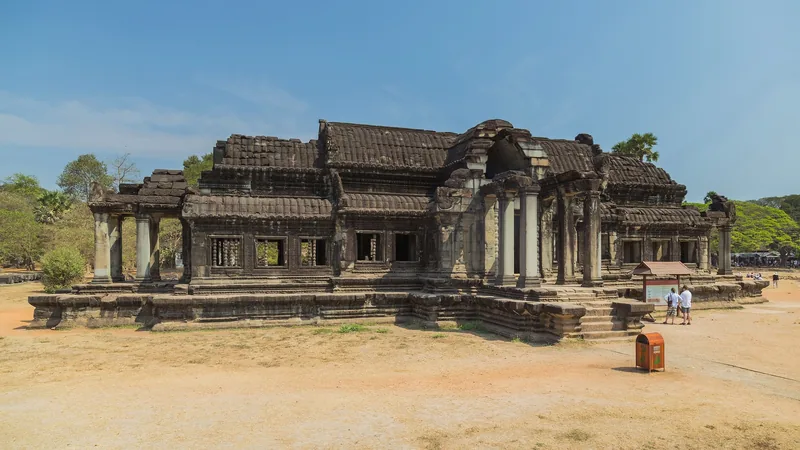
Example itinerary — fully customizable
Classic Indochina
Fifteen days, three countries, nothing shorter than a two-night stop.
View journey
Planning
When to go
Month-by-month conditions across Vietnam, Cambodia and Laos, including what the quiet season is good for.
View journey
Destination guide
Vietnam
The long country: three climates, ten to fourteen nights, and where it is worn out.
View journey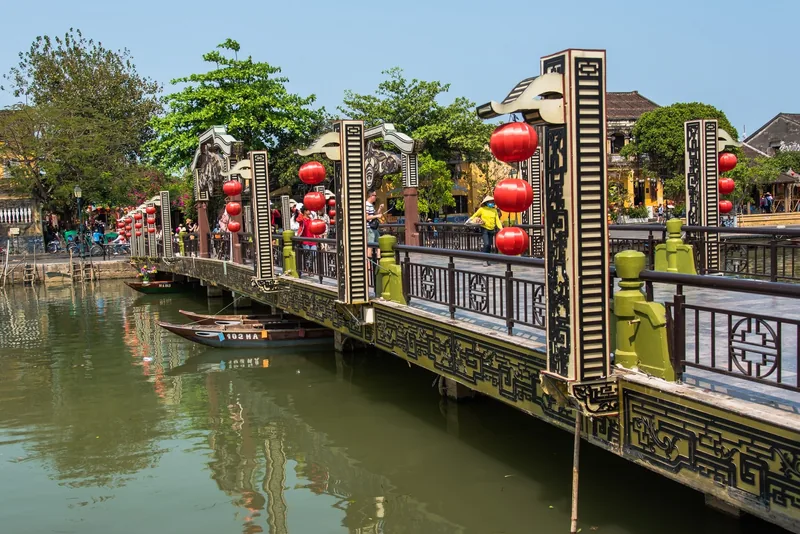
Start planning
Tell us about the journey you have in mind
Dates, party size and the places you care about are enough to start. You get a draft route and an indicative price, not a brochure.
Prefer to talk? WhatsApp or call+84 766 019 399