
 Indochina destination specialist
How we work
Mechanisms, not slogans
Every operator in this region has a page like this and most of them are adjectives. Below are the specific practices we follow, the products we decline to sell and why, and the numbers behind our guide pay. Judge us on whether these are checkable, because that is the only thing that separates this from a logo.
- elephant rides sold
- 0
- maximum working days a month for guides
- 18
- of land costs paid to local suppliers
- 80%
Single-use plastic
Vietnam, Cambodia and Laos have limited plastic collection outside the main cities, and a tour vehicle handing out two small bottles per person per day across a fortnight generates roughly 350 bottles for a group of twelve. That is the thing to fix first because it is entirely within our control.
- Every vehicle carries a 20-litre refill container. Guests are asked to bring a reusable bottle; if you do not have one, we give you one at the start of the trip and it is yours to keep.
- Where the refill container is not practical — long boat days, multi-day treks — we carry larger bottles rather than small ones, which cuts the plastic by about three quarters for the same water.
- We ask our hotels not to place small bottles in the rooms of our guests, and most now comply. Where a hotel refuses, we tell you which one it was rather than quietly absorbing it.
- Picnic lunches on trekking and boat days are packed in reusable containers carried out and back. No cling film, no polystyrene boxes, no plastic cutlery.
- Rubbish from vehicles and boats comes back to a town with a collection system rather than being left at a rural stop. On the Mekong and in Lan Ha Bay this is a firm rule for our boat crews.
What we do not claim: we are not plastic-free. Hotel amenities, restaurant straws and roadside purchases are outside our control, and a page that claimed otherwise would be lying.
Where the money goes
Responsible travel arguments are usually about behaviour. The larger effect is financial, and it is measurable.
| Cost line on a typical fifteen-day trip | Roughly | Who receives it |
|---|---|---|
| Accommodation | 35% | Hotels, the majority family or nationally owned; two of our regular properties are internationally branded and we say so when we quote them |
| Transport, drivers and fuel | 18% | Our own drivers and vehicles, and local charter boat owners |
| Guides | 12% | Directly employed and freelance guides, all nationals of the country they work in |
| Meals included in the itinerary | 10% | Restaurants, chosen locally, with a bias to family kitchens over hotel dining rooms |
| Entrance fees, permits, community charges | 9% | Government bodies and village committees |
| Domestic flights | 8% | Airlines, passed through at cost |
| Our operating margin and office costs | 8% | Our offices in the region and the people in them |
The practical consequence is that roughly four fifths of what you pay for the land portion of a trip stays with businesses and people in the three countries. We can show a guest the supplier-level breakdown for their own itinerary on request; it is the same document we use internally.
International flights are not booked through us and are the largest carbon cost of any trip here by a wide margin. We do not sell offsets, because we cannot verify most of the schemes on offer, and selling something we cannot verify would be worse than saying nothing. What we do instead is build itineraries that fly internally less: on several of our routes we have replaced a short domestic flight with a road day, and we tell you when a route could lose a flight if you can spare the time.
Photography, and the alms round at Luang Prabang
The tak bat, the dawn alms round in Luang Prabang, is the clearest case in the region of a religious practice damaged by the way it is watched. Monks walk before sunrise to receive food. Coaches now arrive at 05:30, visitors stand in the line with flashguns, and food of the wrong kind is sold to tourists to hand over.
Our position, applied to every guest:
- We brief you the evening before, not at the roadside five minutes beforehand. The briefing is ten minutes and it covers why this matters.
- If you come, you watch from the opposite side of the street, seated or standing back, at a distance where a normal lens does not reach a face. No flash, ever.
- We do not buy food for guests to offer. If you wish to give alms, our guide will explain how it is properly prepared and where, and most guests decide not to once they understand it.
- We do not schedule the alms round as a fixed itinerary item for a group. It is offered, individually, to those who want it.
- The same rule applies everywhere else: ask before photographing a person, accept no as an answer, and do not photograph inside a working temple where a service is taking place.
We would rather a guest skipped the tak bat entirely than attended it badly, and we say so.
Elephants
We do not sell elephant riding. Not as an option, not on request, not as an add-on someone books themselves with our guide standing by.
The reason is mechanical rather than sentimental. An elephant carrying a saddle and two adults for several hours a day sustains spinal damage over time, and an elephant that accepts a rider has been through a process of breaking that is not visible to a visitor arriving at midday. Both of those are true regardless of how well the animal is fed or how clean the camp looks.
We also decline bathing programmes where visitors scrub elephants in a river, which look gentler and involve the same control methods, and any venue where elephants perform. What we will arrange is observation at a small number of sanctuaries where the animals are not ridden, not bathed by visitors and not performing, and where we have visited unannounced. If a guest asks for a riding camp we explain this once, clearly, and then decline. We have lost bookings over it.
Children, schools and orphanages
We do not take guests to orphanages, residential children's homes or schools as a visit. This is not a soft preference.
- Orphanage tourism has created a demand that, across the region, has been met by recruiting children who have living parents. A stream of paying visitors is the funding model, and the visits are the product.
- A rotation of strangers through a residential setting is harmful to children regardless of the visitors intentions, and no child in that position can meaningfully refuse to be photographed.
- School visits interrupt teaching for the benefit of the visitor, and the gifts that usually accompany them set up a pattern of children approaching foreigners for things.
- We ask guests not to hand out sweets, money or pens to children at roadsides and in villages, and our guides will say so at the first opportunity it arises rather than afterwards.
If you want your money to reach children in the places you travel through, we will name specific registered organisations working on family-based care and education in each country, and you can give to them directly. We take nothing from that, and we do not build a visit around it.
The people who run your trip
A responsible travel page that says nothing about pay is avoiding the subject. Ours, in numbers.
The practical trade-off for you is visible in our prices. Guide days are the second largest controllable line in a quote, and an operator paying USD 30 a day can quote below us on any itinerary. That is most of what a 25 per cent cheaper quote usually consists of.
Plan My Trip
Ask us for the breakdown
If you are comparing quotes, ask any operator what their guides are paid per day and how many days a month they work. The answer tells you most of what you need.
Where we fall short
- We fly internationally to meet agents and we have not reduced that to zero.
- Our vehicles are diesel. Electric vehicles with the range for a Ha Giang or Mekong route do not yet exist in our fleet size, and we are not going to pretend otherwise.
- Some hotels we use have laundry and air-conditioning practices we would not choose. We raise it; we do not always win.
- We have no third-party sustainability certification. We have looked at several and could not justify the fee against what it would actually change.
Common questions
Questions travellers ask most
Will you arrange an elephant ride if I insist?
No. We explain the reasons once and then decline, and that applies to riding, to visitor bathing programmes and to any venue where elephants perform. We will arrange observation at a small number of sanctuaries we have visited unannounced where none of those things happen.
Can we visit a school or orphanage and bring supplies?
We do not arrange those visits, including ones framed around a donation. If you want your money to help, ask us and we will name registered organisations in each country working on family-based care and education, and you can give directly without a visit being built around it.
Do you offset the carbon from the trip?
No, because we cannot verify most of the schemes available to us and we would rather not sell something we cannot stand behind. We reduce internal flights where a route allows it and we tell you when a domestic flight could be replaced by a road day.
How do I know any of this is true?
Ask for the supplier breakdown of your own quote, which names hotels, guide days and day rates. Ask your guide directly what they are paid and how many days they worked last month. Both are checkable while you are on the trip, which is the only reason to publish figures at all.
Related
Read next
Across Indochina
About us
The mechanics of how we plan, quote and operate a journey.
View journey
Tours
Prices
Price ranges, a supplier-level breakdown, and how a cheap quote is made cheap.
View journey
Tours · Booking
How to book
The whole booking process, with the deposit rules and the deadlines.
View journey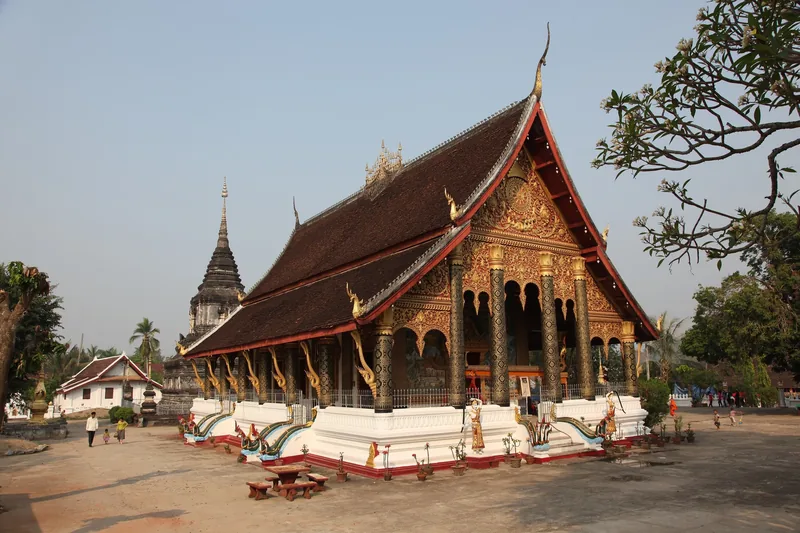
Laos · The north
Luang Prabang
Northern Laos: monasteries, the Mekong, and the slowest good town in the region.
View journey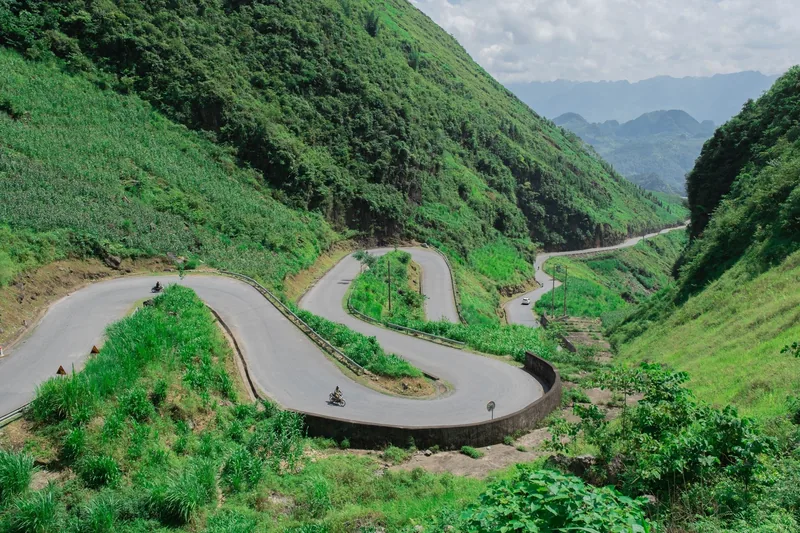
Vietnam · Cambodia · Laos
Tours
Every journey we operate, with days, group size and starting price.
View journey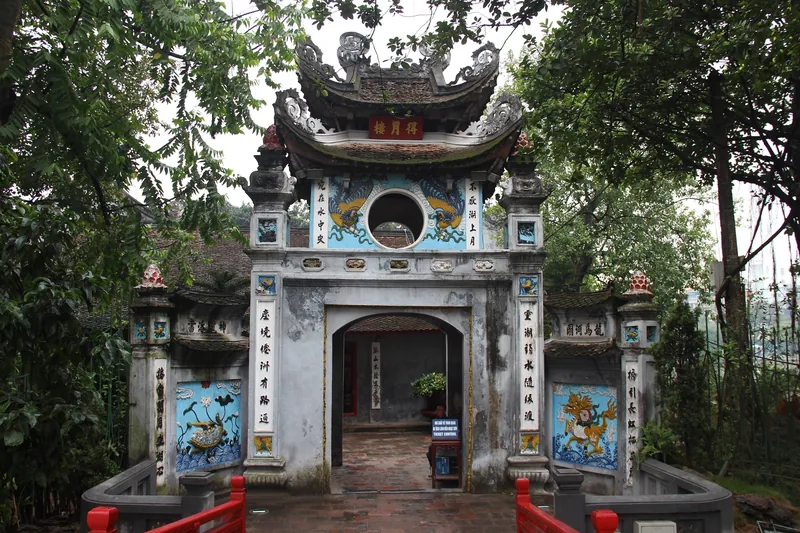
Across Indochina
Contact
Where to find us, how fast we reply, and what to write first.
View journey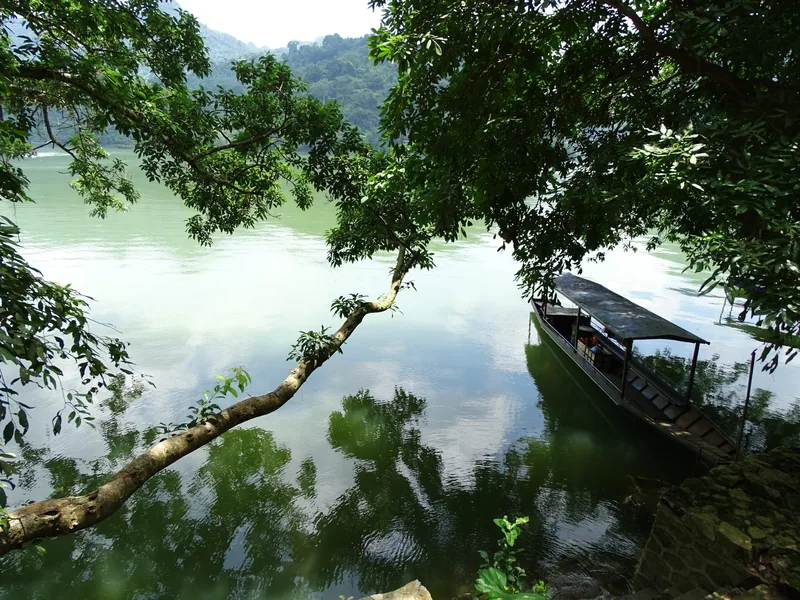
Start planning
Tell us about the journey you have in mind
Dates, party size and the places you care about are enough to start. You get a draft route and an indicative price, not a brochure.
Prefer to talk? WhatsApp or call+84 766 019 399