
 Indochina destination specialist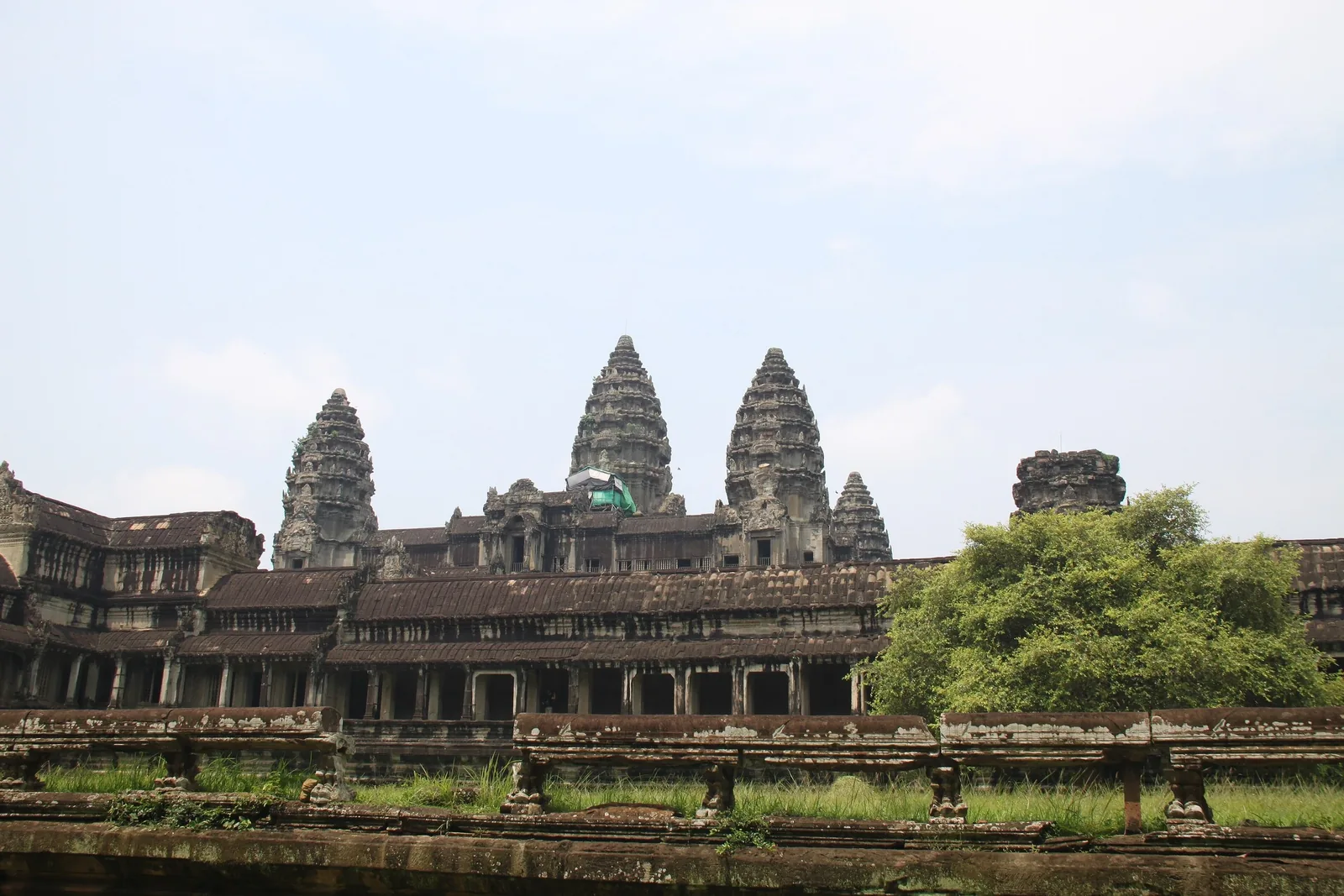
Cambodia · Angkor
Siem Reap and Angkor, three days of it
A town of about a quarter of a million people that exists to serve an archaeological park of four hundred square kilometres. The park is one of the largest pre-industrial settlements ever found. The town is mostly hotels, and that is fine once you know it.
At a glance
What Siem Reap actually is
Two separate things share a name here. Angkor is an archaeological park of about four hundred square kilometres holding more than seventy monuments, the remains of a capital that at its height supported a population estimated in the hundreds of thousands, with a hydraulic system of reservoirs and canals that is the real achievement and the part nobody photographs. Siem Reap is the town six kilometres south, which had perhaps twenty thousand people in the 1990s and now has ten times that, almost entirely because of the park.
The town is not an old town. There is a small French-era quarter, a colonial-era market, a river with good trees along it, and then a grid of hotels, guesthouses and restaurants built in the last twenty-five years. Pub Street and the night markets around it are a purpose-built visitor quarter, loud from 19:00, priced accordingly, and perfectly pleasant for one evening if you treat it as what it is.
The overused part of Angkor is specific and predictable. Between November and February, the pond in front of Angkor Wat holds somewhere between two and four thousand people at sunrise, standing three deep along thirty metres of bank. The photograph is real and the experience of taking it is a crowd at 05:30 in the dark. Ta Prohm, the temple with the trees through it, is unrecognisably quiet at 06:45 and a queue for one doorway by 09:30. Anyone who tells you the temples are not busy is selling something; anyone who tells you they are ruined by the crowds has not tried going in the right hour.
What repays a third day: Banteay Srei, thirty-seven kilometres north, small, pink sandstone, carved more finely than anything in the main group; the Roluos group, which is a century older than everything else and almost empty; Beng Mealea, sixty kilometres east, unrestored and collapsed into the forest; and the floating and stilted villages on the Tonle Sap, which are worth seeing with a guide who will tell you honestly which ones have become a performance.
How many nights, and why two breaks it
Three nights. The limit is human rather than architectural.
Temples in this climate are a physical activity. A full day at Angkor is eight to ten kilometres of walking over uneven stone, much of it without shade, in 32 to 38 degrees. Almost nobody looks properly after about four hours, and the people who try to compress Angkor into one long day describe a blur afterwards. Two half-days at each end, with the middle of the day spent at the hotel, gets you more monument for less suffering.
So: day one, the small circuit and Ta Prohm at opening, back at 11:00, out again at 15:30 for Angkor Wat when the western face has the light. Day two, Angkor Thom and the Bayon early, then Banteay Srei, or Beng Mealea if you would rather see something the forest still holds. Day three is either the lake, the Roluos group, or nothing at all, and choosing nothing is a legitimate answer.
Two nights leaves one temple day. You will see the three famous buildings and remember none of them. One night is not worth the pass price.
When to go
1 = heat or heavy rain · 2 = workable · 3 = the months we would pick
| Months | Daytime range | Rain | What it is actually like |
|---|---|---|---|
| November to February | 22 – 32 °C | 10 – 50 mm/month | Dry, mornings genuinely cool, and the busiest and most expensive months. |
| March to May | 30 – 40 °C | 50 – 150 mm/month | The hard season. By 10:00 the stone radiates and the park empties for a reason. |
| June to August | 27 – 34 °C | 150 – 200 mm/month | Afternoon storms, green moats, half the visitors and a third off hotel rates. |
| September to October | 26 – 33 °C | 250 – 320 mm/month | Wettest. The reservoirs fill, the reflections come back, and unsealed roads to Beng Mealea get difficult. |
Between June and October the moats and reservoirs hold water, which is what the builders intended and what the dry-season photographs never show. Rain comes in the afternoon for an hour or two rather than all day, hotels are a third cheaper, and Ta Prohm at 07:00 in August can have fewer than twenty people in it.
Getting here
The airport moved in 2023. The new field sits about fifty kilometres east of town rather than the seven kilometres of the old one, so the transfer is now a real journey of 45 to 60 minutes, and a tight connection onto an evening flight needs planning it did not need before.
| Route | Time | Rough cost |
|---|---|---|
| Airport to town, by car | 45 – 60 min, 50 km | USD 25 – 35 |
| Bangkok by air | 1 h 10 | USD 90 – 200 one way |
| Ho Chi Minh City by air | 1 h 10 | USD 80 – 180 one way |
| Hanoi by air | 1 h 50 | USD 120 – 250 one way |
| Singapore by air | 2 h 20 | USD 140 – 300 one way |
| Phnom Penh by air | 45 min | USD 70 – 140 one way |
| Phnom Penh by road | 5 h 30, 320 km | USD 140 – 180, the car |
| Phnom Penh by coach | 6 h 30 | USD 12 – 18 per person |
| Battambang by boat in the wet season | 6 – 8 h | USD 25 – 35 per person |
In town and around the park, a tuk-tuk for a full day costs USD 18 to 25 and is the pleasant option in cool weather; a car with a driver is USD 40 to 55 and is the sane one in April. A licensed English-speaking guide is USD 40 to 50 a day and is the single item here most worth paying for, because Angkor is a building site of mythology and chronology that does not explain itself.
What things cost on the ground
| Item | Typical price | Note |
|---|---|---|
| Angkor pass, one day | USD 37 | Bought at the official ticket office or online, photograph taken on the spot |
| Angkor pass, three days | USD 62 | Valid on any three days within a week; the right one for most visits |
| Angkor pass, seven days | USD 72 | Any seven days within a month |
| Beng Mealea | USD 5 extra | Outside the main park pass |
| Mid-range hotel, per night | USD 30 – 60 | Pool, breakfast, ten minutes from the river |
| Good boutique, per night | USD 90 – 160 | Where most of our guests stay |
| Top end, per night | USD 250 – 600 | A handful of heritage and resort properties |
| Local meal, khmer curry or noodles | USD 3 – 6 | Away from the Pub Street grid |
| Restaurant dinner, per person | USD 12 – 25 | Siem Reap has the best restaurant scene in Cambodia |
| Licensed guide, per day | USD 40 – 50 | Book two days rather than three; the third day rarely needs one |
| Tonle Sap boat, shared | USD 20 – 35 per person | Varies sharply by village and by water level |
Cambodia runs on US dollars in practice. Prices are quoted in dollars, ATMs dispense them, and change under a dollar comes back in riel at roughly four thousand to one. Bring small notes; a fifty is hard to break outside a hotel.
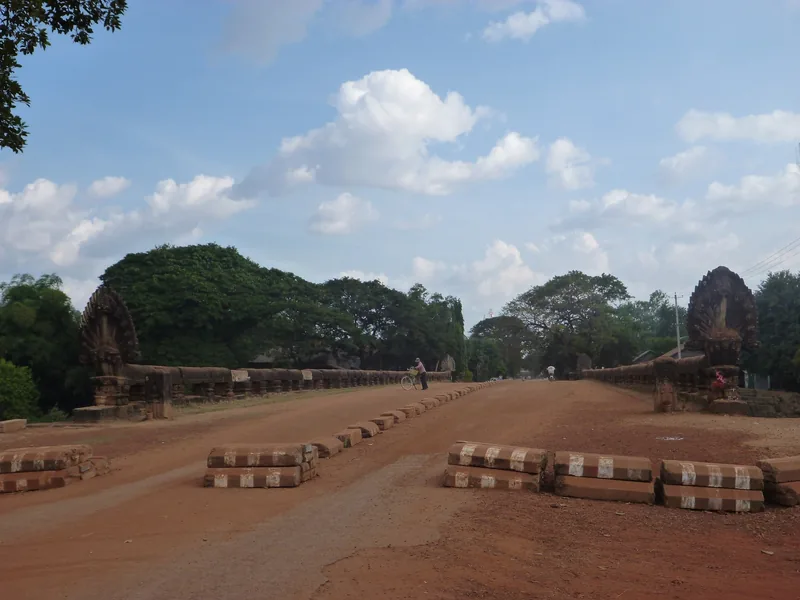
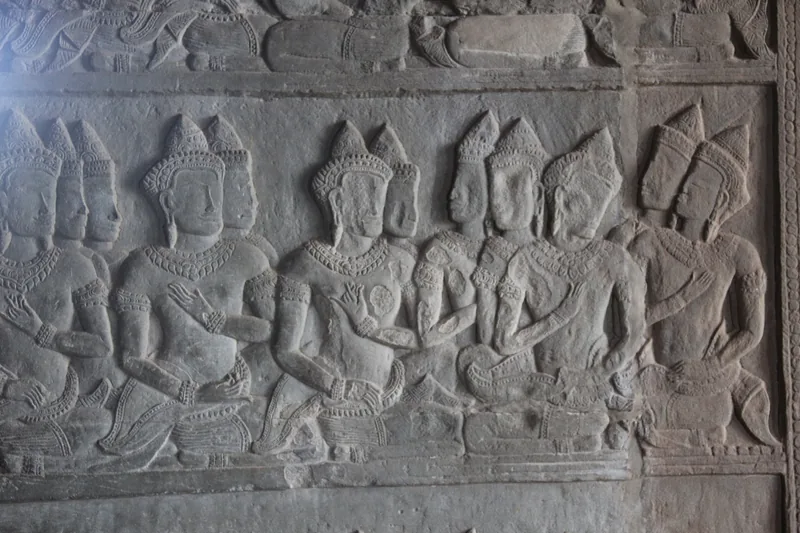
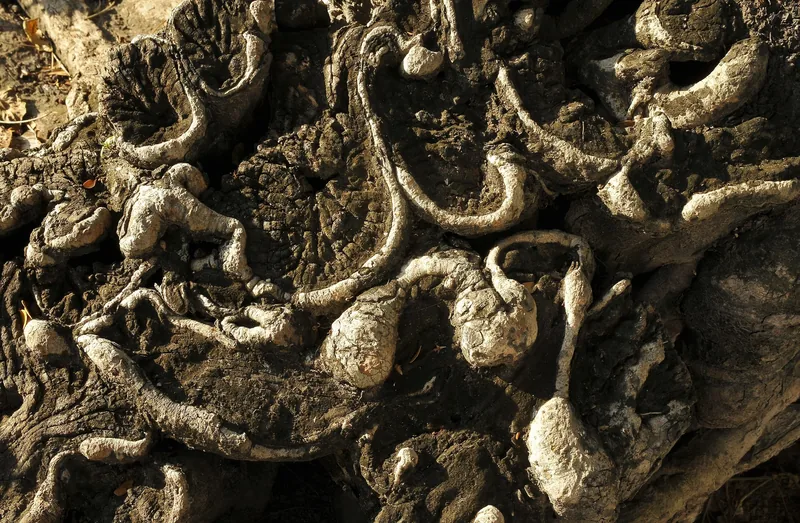
Angkor in five frames
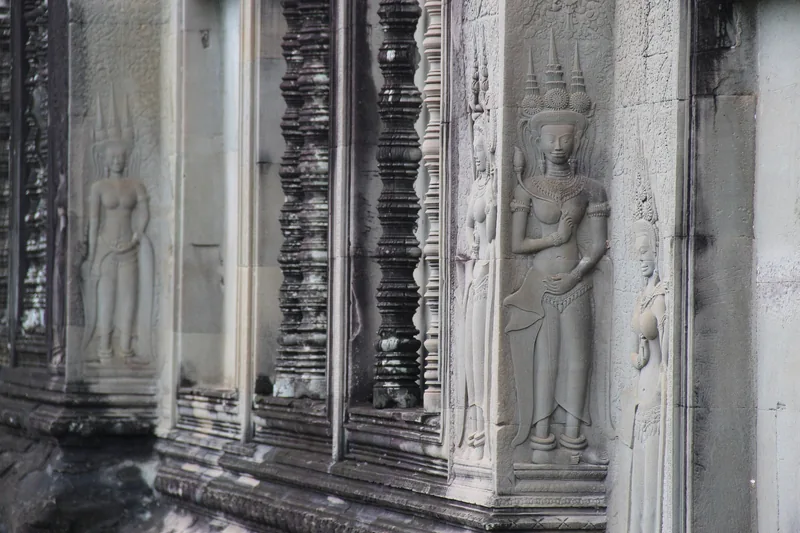
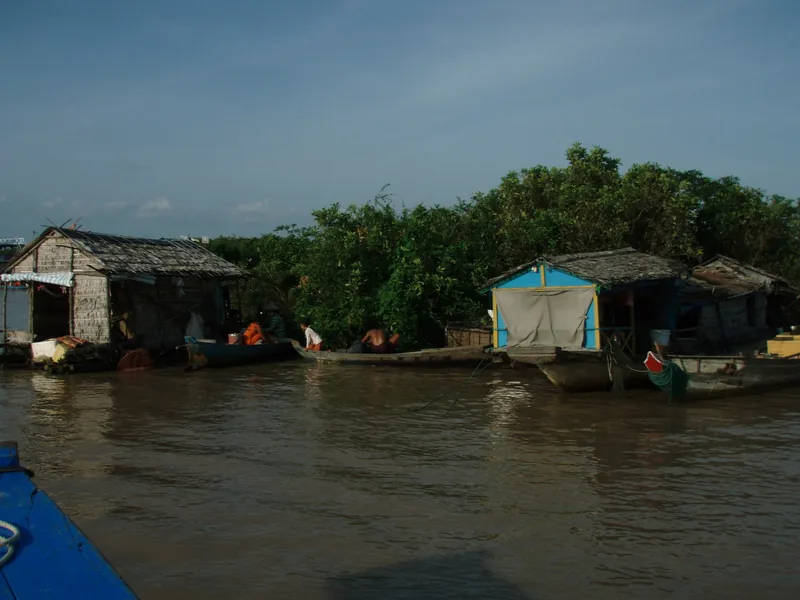
Trips that include Angkor
Angkor closes the fifteen-day Classic Indochina route with two temple days split around the middle of the day, deliberately rather than as one long push.
If Cambodia is the whole trip, the eight-day Angkor and the Cambodian Mekong route gives the park three days and then follows the river down to Phnom Penh, which is the pairing that makes the country make sense rather than reading as one monument and an airport.
Plan My Trip
Angkor with room to breathe
Eight days in Cambodia: three at the temples, then the river to Phnom Penh. Day by day, with prices.
When to skip Siem Reap
- You have one day. The pass alone is USD 37, the good hours are early and late, and a single day produces a set of photographs rather than a visit.
- Steep, uneven stone is a problem. Most temples have steps without handrails, and the upper level of Angkor Wat and the Bayon towers cannot be made accessible. A guide can plan a flat route, but it excludes a lot.
- Your dates are in April and you will not be out of the hotel by 06:00. At 40 degrees on open sandstone the middle of the day is genuinely dangerous for older travellers.
- You want a beach or a city. Siem Reap has neither; the coast is Sihanoukville and Kep, eight hours south, and the city is Phnom Penh.
- You have already spent two weeks looking at temples in Thailand or Myanmar and are tired of them. Angkor is better, but it is more of the same category, and saturation is real.
Common questions
Questions travellers ask most
Is the Angkor Wat sunrise worth it?
Once, if you accept the crowd. Get there by 05:00 for a place at the northern pond, and leave by 06:30 while everyone else goes to breakfast, which is when the temple itself is at its emptiest. If you would rather not, the same building at 16:30 with the western light on it is the better photograph anyway.
How many temples is too many?
Most people reach their limit somewhere in the middle of day two. That is why we build two temple days with the middle of each at the hotel, and leave the third day open. Pushing past the limit means you stop seeing what you are looking at.
Do I need the three-day pass?
If you are staying three nights, yes. It costs USD 25 more than the single day and it removes the pressure to see everything before dark. The seven-day pass makes sense only for people who are coming back mid-trip or who have a specific interest.
Is it safe to walk around town at night?
Yes, in the central area, and it is busy until late. Ordinary care applies: bag-snatching from passing motorbikes happens on quiet streets, so keep bags on the inside shoulder and use a tuk-tuk rather than walking back alone along the river after midnight.
Related
Read next
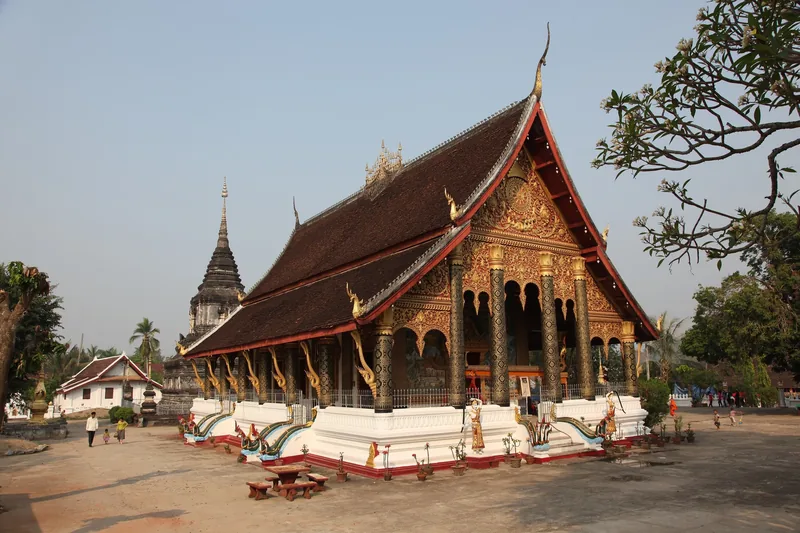
Laos · The north
Luang Prabang
Northern Laos: monasteries, the Mekong, and the slowest good town in the region.
View journey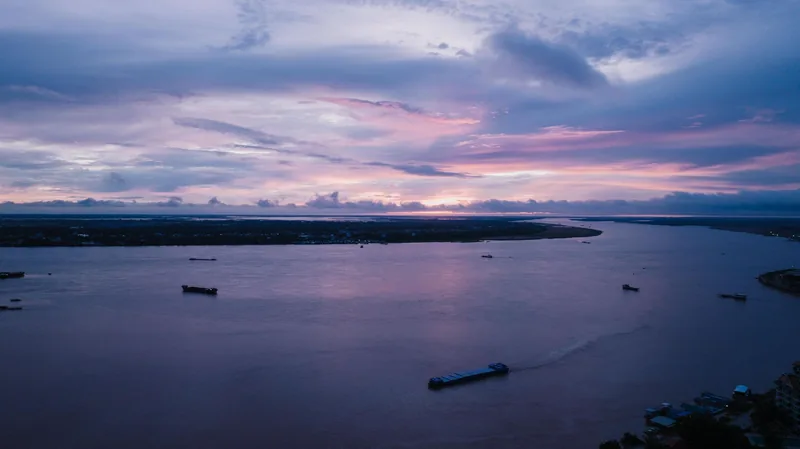
Vietnam · The south
Mekong Delta
Southern Vietnam: canals, rice, orchards and the working end of the river.
View journey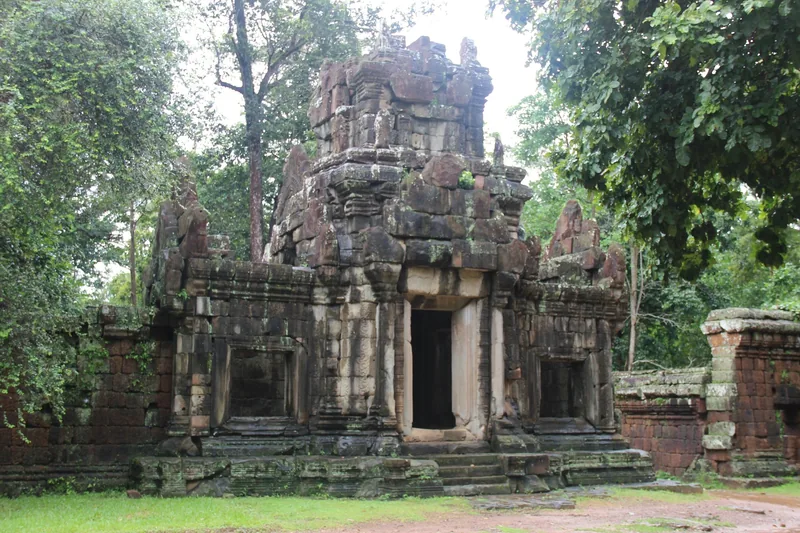
Example itinerary — fully customizable
Angkor and the Mekong
Eight days: Angkor over two days, Battambang, and Phnom Penh.
View journey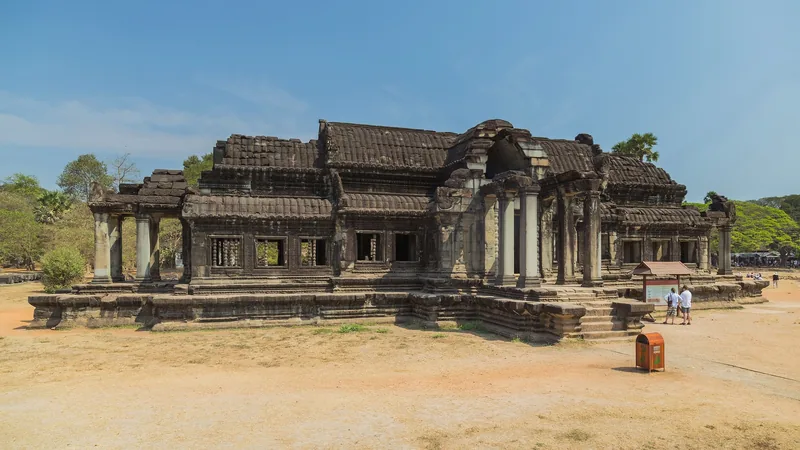
Example itinerary — fully customizable
Classic Indochina
Fifteen days, three countries, nothing shorter than a two-night stop.
View journey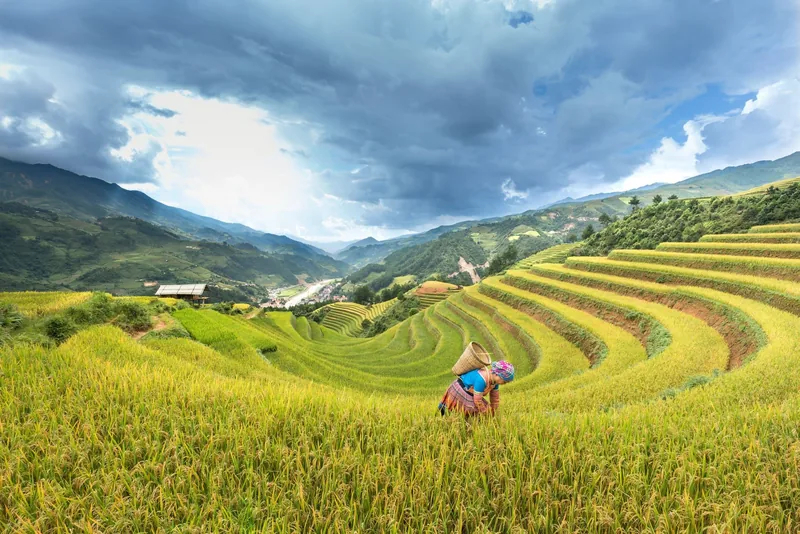
Planning
When to go
Month-by-month conditions across Vietnam, Cambodia and Laos, including what the quiet season is good for.
View journey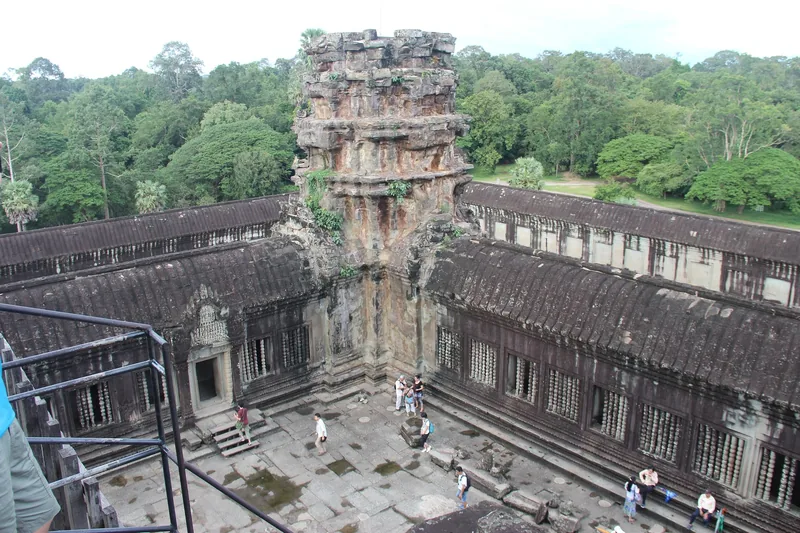
Destination guide
Cambodia
Angkor done properly, plus the Mekong and the coast nobody sees.
View journey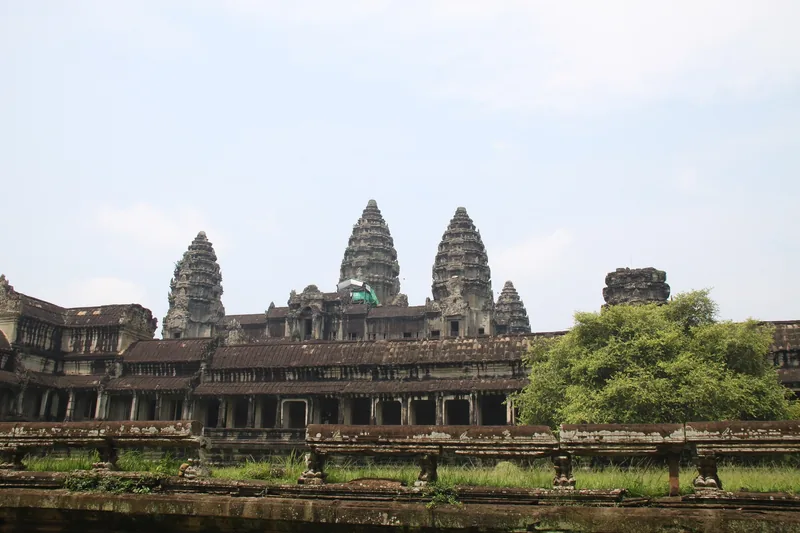
Start planning
Tell us about the journey you have in mind
Dates, party size and the places you care about are enough to start. You get a draft route and an indicative price, not a brochure.
Prefer to talk? WhatsApp or call+84 766 019 399